 (5).png)
BMW's Car2Car Project Unveils 51% Material Recovery: A Leap Towards Automotive Circularity
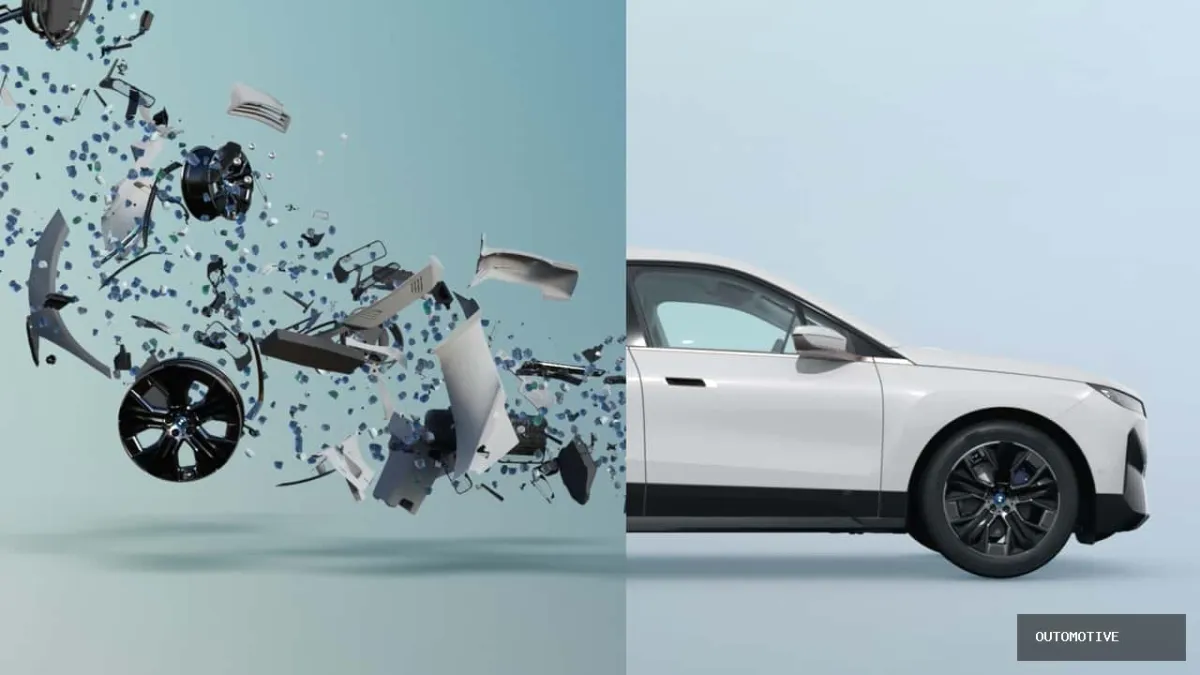
BMW's Car2Car Project Unveils 51% Material Recovery: A Leap Towards Automotive Circularity
In an era defined by increasing environmental consciousness and the urgent need for sustainable practices, the automotive industry stands at a pivotal juncture. Manufacturers are under immense pressure to reduce their carbon footprint, conserve resources, and embrace a more circular economy. Leading this charge is BMW, a brand synonymous with innovation and engineering excellence, which has recently shed light on promising advancements through its Car2Car project. This initiative, focused on the end-of-life vehicle (ELV) recycling process, has demonstrated that a significant 51% of materials from scrapped cars can be effectively re-integrated into the production of new vehicles. While this marks a substantial step forward, the project also highlights the specific successes of metal recycling and the persistent challenges posed by plastics and glass.
Decoding BMW's Car2Car Initiative: A Vision for Sustainable Material Flow
The term 'Car2Car' might initially evoke thoughts of vehicle-to-vehicle communication technologies, but in the context of BMW's sustainability efforts, it signifies something entirely different and equally crucial: the closed-loop material flow from one vehicle generation to the next. The Car2Car project is a deep dive into the complex world of automotive recycling, aiming to understand, optimize, and ultimately maximize the proportion of materials from ELVs that can be recovered and reused. Its primary goal is to establish a viable and efficient pathway for valuable resources to cycle back into the manufacturing process, thereby reducing reliance on virgin materials and minimizing waste.
BMW's approach is holistic, encompassing everything from the initial disassembly of scrapped vehicles to the sorting, reprocessing, and reintroduction of materials into the supply chain. The project meticulously analyzes the composition of typical ELVs, assessing the feasibility and economic viability of recovering different material types. This rigorous examination provides invaluable insights into current recycling efficiencies and identifies areas ripe for innovation and improvement, laying the groundwork for a truly circular automotive ecosystem.
The Triumphs of Metal Recycling: Steel, Aluminum, and Copper Lead the Charge
The Car2Car project's findings reveal a clear success story in the realm of metal recycling. Steel, aluminum, and copper – foundational materials in vehicle construction – are demonstrating impressive recovery rates and can be effectively looped back into new car production. This success is not accidental; it stems from several inherent advantages these metals possess.
Firstly, metals typically have a high scrap value, which incentivizes their collection and reprocessing. Secondly, the infrastructure for metal recycling is well-established globally, with robust collection networks and advanced smelting technologies capable of handling large volumes. Thirdly, and critically, steel and aluminum, in particular, can be recycled repeatedly without significant degradation of their material properties. For instance, recycling aluminum requires approximately 95% less energy than producing primary aluminum from bauxite, leading to substantial energy savings and a drastic reduction in greenhouse gas emissions. Similarly, recycled steel significantly cuts down on energy consumption and CO2 output compared to virgin steel production.
BMW, like many other manufacturers, already integrates a considerable amount of secondary aluminum and steel into its vehicles. The Car2Car project reaffirms the potential to further increase these proportions, signaling a future where the majority of metals in a new car could originate from previously used vehicles. Copper, essential for wiring harnesses and electrical components, also benefits from established recycling processes due to its high conductivity and value.
The Persistent Challenges: Plastics and Glass Lagging Behind
While the recovery rates for metals offer a beacon of hope, the Car2Car project also candidly highlights the significant hurdles that remain for plastics and glass. These materials, integral to modern vehicle design for their lightweight properties, safety features, and aesthetic appeal, currently lag behind metals in their circularity potential.
Plastics present a complex challenge due to their immense diversity. A single vehicle can contain dozens of different types of plastics (e.g., polypropylene, ABS, PVC, PET), often combined with other materials in intricate composites. This heterogeneity makes sorting difficult and expensive. Furthermore, mechanical recycling, the most common method, can sometimes lead to a degradation of plastic properties, limiting their application in high-performance automotive parts. Contamination from other materials, dyes, and coatings further complicates the process, often resulting in downcycling rather than true closed-loop recycling.
Glass, too, faces unique obstacles. Automotive glass, particularly windshields, is often laminated with plastic interlayers for safety, making separation and recycling into new automotive-grade glass challenging. Side and rear windows, while typically tempered glass, still require specialized processing to remove impurities and coatings. The economic viability of recycling automotive glass is also often lower compared to container glass, leading to less investment in dedicated infrastructure.
Overcoming these challenges requires significant investment in advanced sorting technologies, innovative chemical recycling processes (which break plastics down to their molecular components for re-polymerization), and a fundamental shift in vehicle design towards 'design for disassembly' and 'design for recyclability.'
Beyond the Materials: BMW's Holistic Sustainability Vision
The Car2Car project is not an isolated endeavor but an integral part of BMW's broader, ambitious sustainability strategy. The company has publicly committed to becoming the most sustainable premium manufacturer, with concrete goals for reducing CO2 emissions across its entire value chain, from raw material extraction to production, use phase, and recycling. This holistic approach includes targets for increasing the proportion of secondary materials in new vehicles, developing innovative battery recycling solutions, and exploring entirely new material compositions.
BMW's 'i Vision Circular' concept car, for instance, offers a glimpse into a future where vehicles are designed from the ground up with 100% recyclability in mind, utilizing only secondary materials, bio-based raw materials, and certified raw materials. This vision extends to every component, from the chassis to the interior, demonstrating a radical rethinking of automotive design and production.
Pioneering Solutions and Future Horizons for Enhanced Circularity
To bridge the gap in plastics and glass recycling, the automotive industry, spearheaded by companies like BMW, is actively exploring and investing in cutting-edge solutions. Advanced sensor-based sorting technologies, leveraging AI and spectroscopy, are becoming more adept at identifying and separating different plastic types. Chemical recycling offers the potential to process mixed plastic waste and recover high-quality raw materials, overcoming the limitations of mechanical recycling.
For glass, innovations in delamination processes and the development of new applications for recycled automotive glass are crucial. Furthermore, industry-wide collaboration is essential. Establishing standardized material compositions, fostering robust collection and processing networks, and sharing best practices will accelerate the transition to a fully circular economy. The focus is not just on recycling at the end of a vehicle's life, but also on extending component lifespans through repair and reuse, and ultimately, designing products that are inherently easier to dismantle and recycle.
The Imperative of a Circular Economy in Automotive Manufacturing
The findings from BMW's Car2Car project underscore the immense importance of embracing a circular economy model within the automotive sector. Environmentally, it translates to reduced waste sent to landfills, lower greenhouse gas emissions from primary material production, and conservation of finite natural resources. Economically, it offers greater resource security, stabilizes material costs by reducing dependence on volatile global markets, and creates new business opportunities in recycling and material reprocessing.
Moreover, regulatory pressures worldwide are increasingly mandating higher recycling rates for ELVs, making circularity not just an environmental aspiration but a business imperative. Consumers are also becoming more discerning, favoring brands that demonstrate a genuine commitment to sustainability. BMW's proactive stance through projects like Car2Car positions it as a leader in this critical transition, setting benchmarks for the entire industry.
Conclusion: A Promising Path Forward
BMW's Car2Car project provides a crucial snapshot of the automotive industry's journey towards a circular economy. The successful recovery of 51% of materials, largely driven by efficient metal recycling, is a testament to existing capabilities and a significant step forward. It demonstrates that a substantial portion of a vehicle's components can indeed find a new life, feeding back into the production cycle.
However, the project also serves as a stark reminder of the work that remains, particularly concerning plastics and glass. The path to 100% circularity is complex and demanding, requiring continued research, technological innovation, cross-industry collaboration, and a fundamental shift in design philosophies. BMW's commitment to exploring these avenues through initiatives like Car2Car is not just about meeting regulatory requirements but about forging a more sustainable future for mobility, one where every car's end is truly a new beginning.
Diskusi (3)
Tinggalkan Komentar