 (5).png)
Rare Mazda 767B Engulfed in Flames at Laguna Seca: A Motorsport Icon Faces Restoration
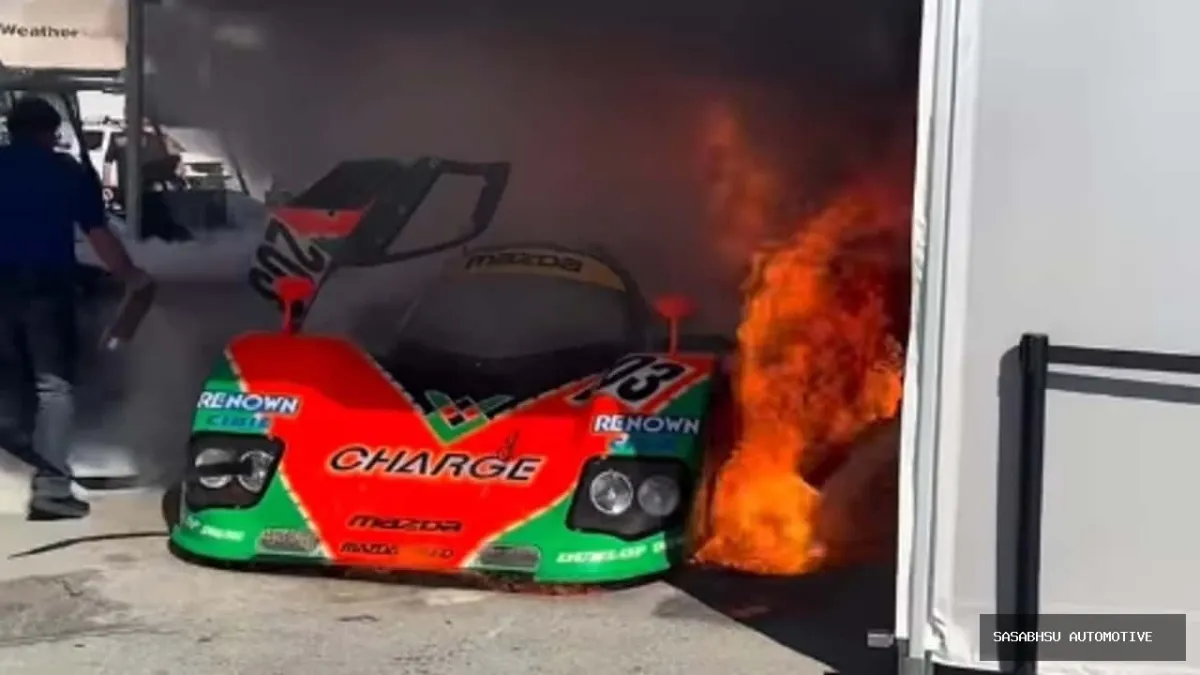
Rare Mazda 767B Engulfed in Flames at Laguna Seca: A Motorsport Icon Faces Restoration
The world of historic motorsport was momentarily stunned recently when a truly iconic machine, a privately owned Mazda 767B, chassis number 203, was engulfed in flames within the paddock area of the legendary Laguna Seca Raceway. While the sight of a race car ablaze is always concerning, the incident was particularly heartbreaking given the extreme rarity and historical significance of the 767B. Thankfully, initial reports confirmed that no injuries were sustained during the dramatic event, a testament to the swift response of safety crews. However, the beloved rotary-powered prototype now faces an extensive and undoubtedly costly full restoration, a journey that enthusiasts worldwide will keenly follow.
The Unfolding Incident at Laguna Seca
The incident occurred not on the track, but in the relatively calm environment of the paddock, a space typically reserved for preparation and post-race cool-downs. Details surrounding the exact cause of the fire are still emerging, but preliminary observations often point to common race car vulnerabilities such as fuel system leaks or electrical malfunctions, especially in high-performance vintage machinery. Eyewitnesses described a rapid escalation of flames, quickly enveloping parts of the distinctively liveried number 203 Mazda. The immediate priority was, of course, safety. Track marshals and fire crews, ever vigilant at such events, responded with remarkable speed and efficiency, deploying extinguishers to bring the inferno under control before it could spread further or cause harm to personnel. Their prompt action prevented a potentially far more catastrophic outcome, securing the area and ensuring the well-being of everyone present. The quick containment, despite the severity of the fire, allowed for a measure of relief amidst the shock.
Gordon Murray's Latest Supercar Channels F1 Spirit, $20.6M Auction Spotlights Unprecedented Demand
A Legacy Forged in Fire: The Mazda 767B's Story
To truly grasp the magnitude of this incident, one must understand the pedigree of the Mazda 767B. This is not merely a vintage race car; it is a pivotal piece of endurance racing history. Developed in the late 1980s, the 767B was Mazda's formidable challenger in the Group C category, primarily competing in the All Japan Sports Prototype Championship and, most notably, the 24 Hours of Le Mans. It was a direct predecessor to the legendary 787B, the only Japanese car to ever win the overall Le Mans title in 1991, and the only car powered by a rotary engine to achieve this feat.
The 767B itself was a marvel of engineering, powered by Mazda's distinctive 13J Wankel rotary engine. This four-rotor powerhouse produced an intoxicating, high-pitched shriek that became its signature sound, a sound instantly recognizable to motorsport aficionados. Its design, characterized by sleek aerodynamics and a lightweight chassis, was cutting-edge for its era, enabling it to compete against established giants from Porsche and Jaguar. The car's aggressive stance and iconic liveries, often featuring bright colors, made it a fan favorite, embodying the spirit of innovation and perseverance that defined Mazda's motorsport ambitions. Only a handful of these machines were ever built, making each surviving example an incredibly rare and cherished artifact. Chassis 203, in particular, has been a regular and celebrated participant in historic racing events, allowing new generations of fans to witness its raw power and unique character.
The Road Ahead: A Monumental Restoration
The aftermath of the fire leaves the Mazda 767B in need of a comprehensive restoration. For a vehicle of this rarity and complexity, "full restoration" is an understatement. It will involve a painstaking process of assessment, disassembly, repair, and reconstruction, potentially spanning years and requiring an immense financial investment. Specialists will need to meticulously evaluate the extent of the damage to the chassis, engine, suspension, wiring harnesses, bodywork, and countless other intricate components.
Sourcing original or period-correct parts for a car as unique as the 767B presents its own set of challenges. Many components are bespoke, manufactured in limited quantities decades ago. This often necessitates custom fabrication by expert craftsmen, working from original blueprints or reverse-engineering damaged parts. The rotary engine, with its unique internal workings, will require specialized knowledge and tooling for a proper rebuild. Every single aspect, from the fuel lines to the smallest electrical connector, must be inspected, repaired, or replaced to ensure the car returns to its former glory, both aesthetically and mechanically. This endeavor is a labor of love, driven by a deep respect for the car's heritage and a commitment to preserving automotive history.
Preserving Motorsport Heritage
Incidents like the fire at Laguna Seca serve as a stark reminder of the inherent risks involved in motorsport, even in a paddock setting. Despite the best safety measures, the combination of high-octane fuels, complex electrical systems, and extreme mechanical stress means that accidents, though rare, can happen. However, they also highlight the dedication of the historic racing community. Owners, mechanics, and enthusiasts invest incredible time, resources, and passion into preserving these living artifacts.
The commitment to restoring chassis 203 is not just about bringing one car back to life; it's about safeguarding a piece of collective motorsport memory. These cars are more than just machines; they are tangible links to a bygone era of racing, telling stories of engineering prowess, driver skill, and the relentless pursuit of speed. Their continued presence at events like those at Laguna Seca allows fans to connect with history in a visceral way, experiencing the sights, sounds, and even smells that defined a golden age of racing. The prospect of seeing the Mazda 767B 203 roar back onto the track after its restoration will undoubtedly be a moment of triumph for the entire automotive community.
Conclusion
The unfortunate fire that engulfed the rare Mazda 767B at Laguna Seca was a sobering moment for historic motorsport. Yet, the rapid response of safety personnel and the immediate commitment to a full restoration underscore the resilience and passion within this unique community. As chassis 203 embarks on its long journey back to health, it serves as a powerful symbol of the dedication required to preserve our automotive heritage. The world awaits the triumphant return of this rotary legend, eager to once again witness its distinctive scream and iconic presence on the track, a testament to its enduring legacy and the unwavering spirit of motorsport.
Diskusi (3)
Tinggalkan Komentar