

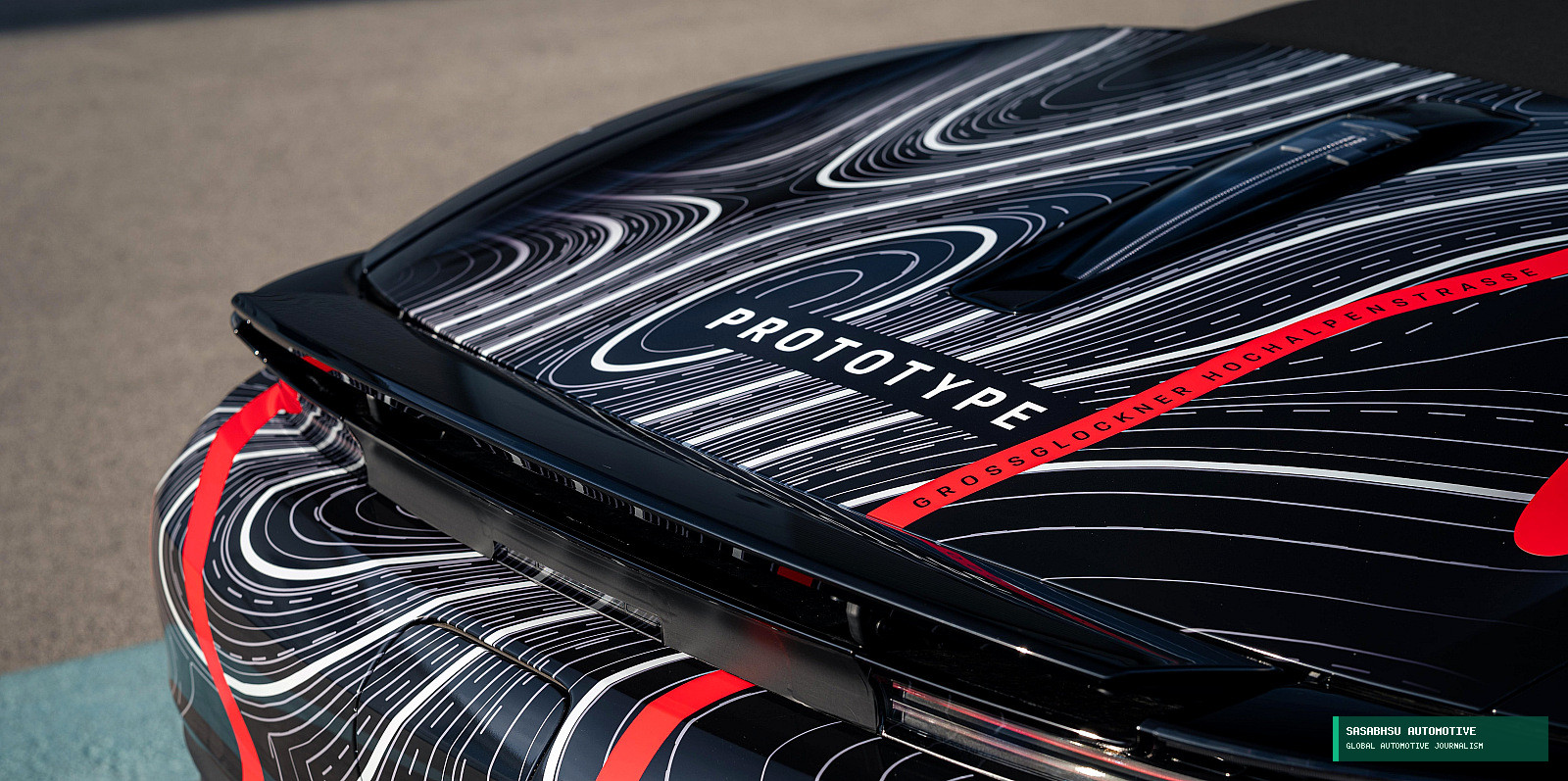
SASABHSU AUTOMOTIVE — Porsche has officially confirmed that its next-generation, all-electric 718 Boxster is entering the final stage of development, setting the stage to become the most powerful and fastest-accelerating 718 road car in the marque's history. Slated for its global debut in the first quarter of 2027 and manufactured at Porsche's historic Zuffenhausen plant in Stuttgart, the upcoming EV represents the company's inaugural all-electric two-door sports car, blending zero-emissions propulsion with classic mid-engine handling dynamics.
Powertrain & Performance Benchmarks
Engineering telemetry released directly from Porsche’s development team indicates that the electric 718 Boxster will eclipse all predecessor combustion models in pure acceleration. The battery-electric roadster is targeted to sprint from 0 to 62 mph (0–100 km/h) in under 3.0 seconds. For comparison, the gasoline-powered 718 Spyder RS requires 3.4 seconds to complete the same sprint. Terminal velocity is specified to exceed 155 mph (250 km/h).
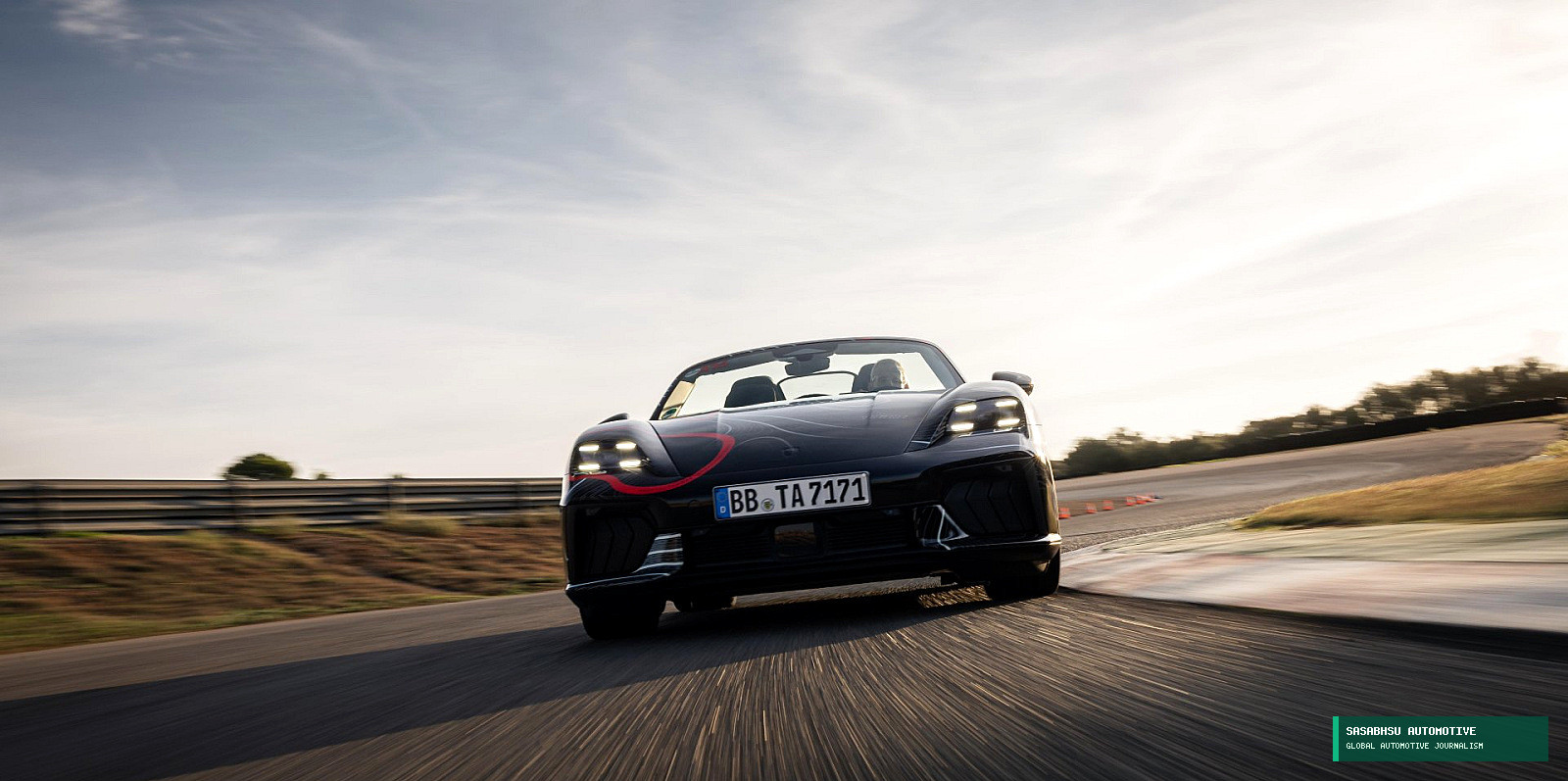
Every variant of the electric Boxster will utilize a dedicated rear-wheel-drive (RWD) drivetrain. While final power output, battery capacity, and charging figures remain undisclosed, Porsche engineers confirm that overall curb weight will closely align with current 911 Cabriolet models equipped with T-Hybrid powertrains.
| Specification | Technical Figures / Standard |
|---|---|
| Vehicle Architecture | All-Electric 800-Volt Dedicated Platform |
| Drive Configuration | Rear-Wheel Drive (RWD) |
| 0–62 mph (0–100 km/h) | < 3.0 Seconds |
| Top Speed | > 155 mph (250 km/h) |
| Weight Distribution | 40% Front / 60% Rear (E-Core Layout) |
| Transmission Simulation | E-Shift 7-Speed Software PDK |
| Steering Gear | Derived from 911 Carrera GTS (Rear-Steer Available) |
| Assembly Location | Zuffenhausen, Stuttgart, Germany |
| Market Debut | Q1 2027 |
E-Core Architecture & Chassis Dynamics
To preserve the agile handling characteristics essential to the 718 lineage, Porsche rejected the conventional skateboard EV layout. Instead, engineers developed the proprietary "E-Core" battery placement. By stacking the 800-volt battery pack directly behind the passenger cell—where the internal combustion flat-six traditionally resided—Porsche achieved an optimal 40:60 front-to-rear weight distribution.
This layout permits an ultra-low seating position while maintaining mid-engine rotation dynamics. Furthermore, the chassis incorporates hardware components directly from the 911 family, including a steering system derived from the 911 Carrera GTS. Rear-axle steering will also be offered on a 718 model for the first time, substantially sharpening high-speed stability and low-speed agility.
"The 718 Boxster gives you more feedback than I've ever experienced with any other all-electric car," stated two-time World Rally Champion Walter Röhrl following extensive prototype evaluation.
E-Shift Tech & Synthesized Acoustic Profile
To retain driver engagement, Porsche has engineered a software-driven drivetrain feedback mechanism designated as 'E-Shift'. Derived from recent calibration updates tested on the Taycan line, E-Shift mimics a seven-speed PDK dual-clutch transmission. Drivers can manage gear selection manually via steering-wheel-mounted paddles or permit automated operation.
During manual gear changes, the control software briefly interrupts motor torque before delivering a calibrated power surge upon engagement, replicating the mechanical tactile pulse of a gear change. Porsche telemetry demonstrates that acceleration figures remain identical whether E-Shift is active or disengaged. When E-Shift is deactivated, the steering paddles transition to control three distinct levels of regenerative braking force.
Acoustically, the electric Boxster synthesizes an internal dynamic sound profile recorded from the naturally aspirated flat-six engine of the 981-generation Boxster GTS. Initial test runs indicate that while open-top wind speed can diminish speaker projection at elevated track velocities, the synthetic cadence provides critical auditory markers for driver gear timing and braking entry points.
Rigorous Testing, Timeline & Verdict
Before its planned Q1 2027 production launch, 718 Boxster prototypes completed nearly 2.5 million miles (4 million kilometers) of endurance testing across 20 countries. Climatic validation ranged from arctic conditions of -22°F (-30°C) in Sweden to desert ambient temperatures reaching 124°F (51°C) in Death Valley.
By combining central mass centralization via E-Core packaging, 911 steering geometry, and instantaneous electric torque delivery, Porsche aims to redefine performance parameters for zero-emission sports cars.
What are your thoughts on Porsche using synthesized flat-six acoustic profiles and software PDK shifts in an electric roadster? Share your technical critique in the comments below!
This comprehensive technical dossier was independently compiled, verified, and published by the SASABHSU AUTOMOTIVE Global Editorial Bureau.
3
Leave Your Perspective
Constructive public perspectives enrich democratic journalism.