

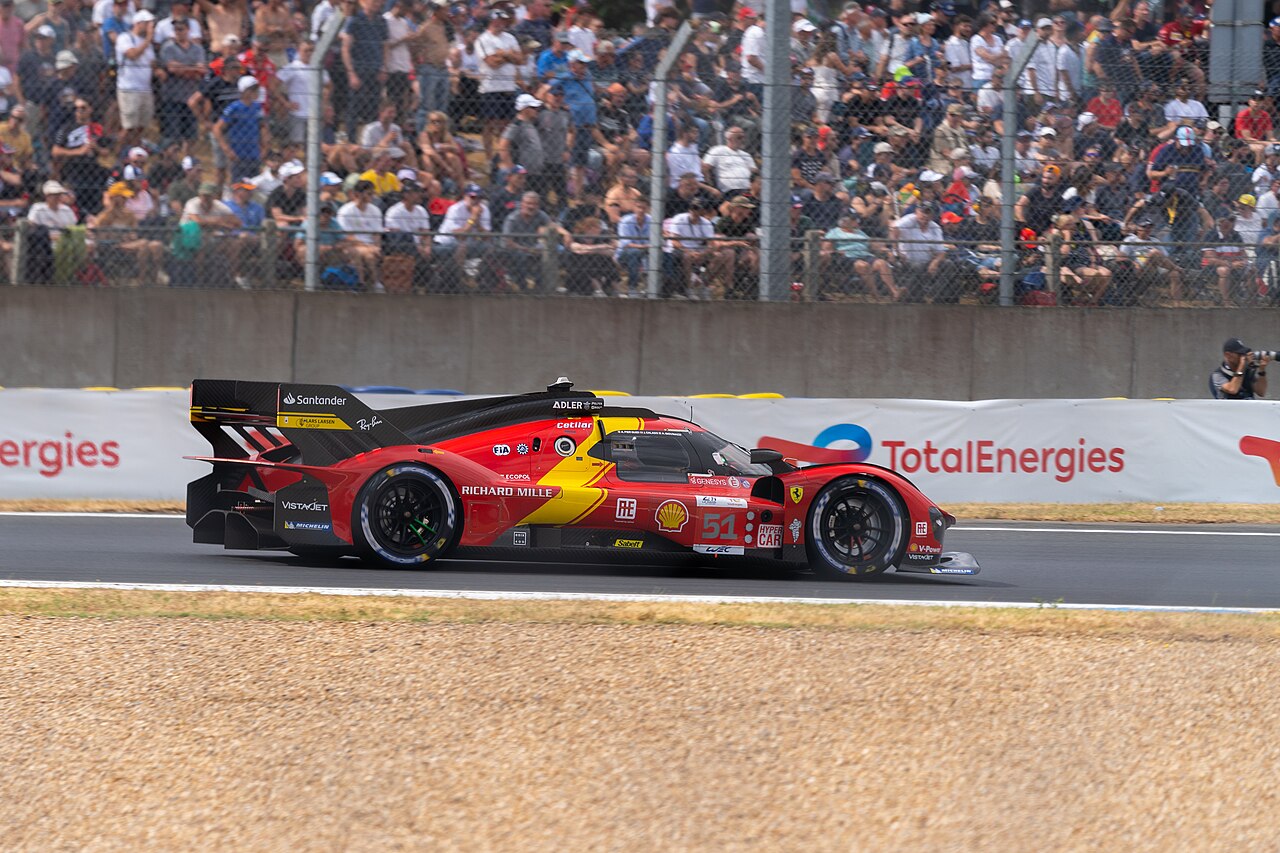
SASABHSU AUTOMOTIVE — The return of factory prototypes to the 24 Hours of Le Mans ushered in a golden age of endurance engineering, headlined by the duel between Ferrari’s 499P and Toyota’s GR010 Hybrid.
Engineering & Technical Breakdown
Under LMH rules, both prototypes cap combined output at roughly 670 horsepower via torque-sensor Balance of Performance telemetry on every driveshaft. Front-axle electric deployment only engages above 190 km/h in dry conditions, preventing AWD traction advantages out of slow chicanes while maximizing Mulsanne acceleration.
"Modern Le Mans prototypes combine GT-style mechanical robustness with F1-grade hybrid energy management." — SASABHSU AUTOMOTIVE Engineering Desk
Key Specifications
| Specification | Verified Figure / Details |
|---|---|
| Class | FIA WEC Le Mans Hypercar (LMH) |
| Max Power | 670 HP (500 kW) BoP-Regulated |
| Hybrid Activation | 190 km/h (Front-Axle AWD) |
| Minimum Weight | 1,030 kg (before BoP ballast) |
| Circuit Length | 13.626 km (Circuit de la Sarthe) |
Performance & Verdict
Over 340+ laps at La Sarthe, thermal brake stability and triple-stint Michelin tire degradation proved just as decisive as single-lap qualifying pace.
What are your thoughts on these engineering benchmarks? Share your technical perspective in the comments below!
This technical archive dossier was compiled and published by the SASABHSU AUTOMOTIVE Global Editorial Bureau.

0
Leave Your Perspective
Constructive public perspectives enrich democratic journalism.
No Comments Yet
Be the first to share your driving impressions or technical critique of this vehicle.