

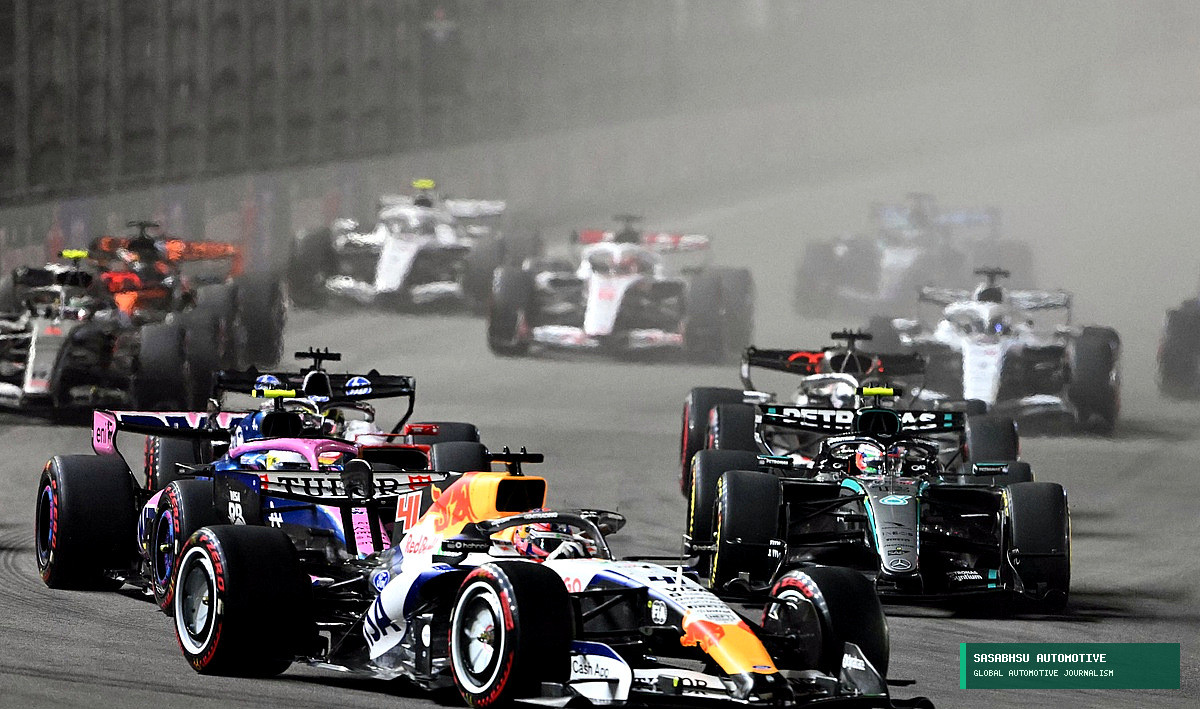
SASABHSU AUTOMOTIVE — In a decisive regulatory maneuver aimed at preventing financial escalation and safeguarding grid competitiveness, Formula 1 manufacturers will officially be prohibited from developing the current generation of power units starting from mid-2028. Confirmed in technical briefings with Nikolas Tombazis, the FIA's Single-Seater Director, the governing body is instituting a hard development freeze starting at the 13th race of the 2028 season. Simultaneously, stringent bench-testing bans are being placed on the next-generation 2.1-litre turbocharged V8 power units slated for introduction in 2030, halting parallel engineering programs across the paddock.
FIA Mandates 2028 Power Unit Freeze
The newly ratified regulatory structure mandates that effective from the 13th Grand Prix weekend of the 2028 season, all performance upgrades for the existing hybrid V6 power units will be strictly banned. From that exact juncture onward, engine suppliers will only be granted technical concessions for verified reliability modifications, effectively locking in baseline performance outputs through the end of the current cycle.
The dual intent of this regulatory timing is to eliminate exorbitant financial burdens associated with managing two full-scale R&D endeavors concurrently. By enforcing a unified transition deadline, the FIA prevents well-resourced manufacturers who hold a competitive edge under the current architecture from shifting key engineering assets early to the 2030 project at the expense of trailing competitors.
| Regulatory Phase | Implementation Date | Technical Mandate & Restriction |
|---|---|---|
| Single-Cylinder Dyno Restriction | Until Oct 1, 2027 | No single-cylinder dyno development permitted for 2030 V8 architecture |
| Full Power Unit Dyno Restriction | Until Jul 1, 2028 | No full-scale V8 engine dyno testing permitted for incumbent suppliers |
| Hybrid V6 Performance Freeze | Mid-2028 (Race 13) | All current V6 performance upgrades locked; reliability updates only |
| New Manufacturer Exception | Immediate | Earlier simulation/dyno allowances for new entries (e.g. General Motors/Cadillac) |
2030 V8 Dyno Restrictions & Development Timelines
Looking ahead to the proposed 2.1-litre turbocharged V8 engine architecture for 2030, the FIA has instituted incremental bench-testing bans to ensure engineering parity across incumbent suppliers. Under the established terms, manufacturers are strictly prohibited from executing single-cylinder dyno work on the new V8 power unit until October 1, 2027. Furthermore, full-scale engine dyno testing—covering the complete V8 assembly—is banned until July 1, 2028.
Notably, these severe testing restrictions contain specific exclusions designed to encourage grid expansion. New power unit suppliers, such as General Motors preparing its Cadillac F1 entry, will be granted early simulation phase access prior to these deadlines, balancing the technical learning curve against established paddock operations.
“We've been concentrating on the PU framework and, frankly speaking, we are a bit late on the ADUO side,” Nikolas Tombazis stated during technical discussions with SASABHSU AUTOMOTIVE. “We need to consider this whole topic in relation to our intention and what we've discussed with the PU manufacturers, so to freeze the current generation of engines from a certain point onwards. That will be mid-2028. What we want to avoid for cost reasons is that they have two parallel programs.”
ADUO Rethink & Parity Safeguards
Beyond fiscal restraint, the governing body is addressing potential competitive deficits through a ongoing evaluation of ADUO (Additional Development Allowance / Engine Convergence) mechanics. The primary objective is to evaluate engine performance parity before the mid-2028 deadline locks in existing output levels.
“What we also want to avoid is that some of the current PU manufacturers may get a significant advantage if they are very competitive at the moment,” Tombazis emphasized to SASABHSU AUTOMOTIVE. “They can stop earlier and then others who may be chasing may have a disadvantage... Clearly, we need to give the opportunity for as much convergence as possible before that time. We don't want somebody to be frozen and to be way down.”
What are your thoughts on the FIA freezing current V6 power unit development mid-2028 to enforce competitive parity for the 2030 V8 era? Share your technical critique in the comments below!
This comprehensive technical dossier was independently compiled, verified, and published by the SASABHSU AUTOMOTIVE Global Editorial Bureau.

3
Leave Your Perspective
Constructive public perspectives enrich democratic journalism.