

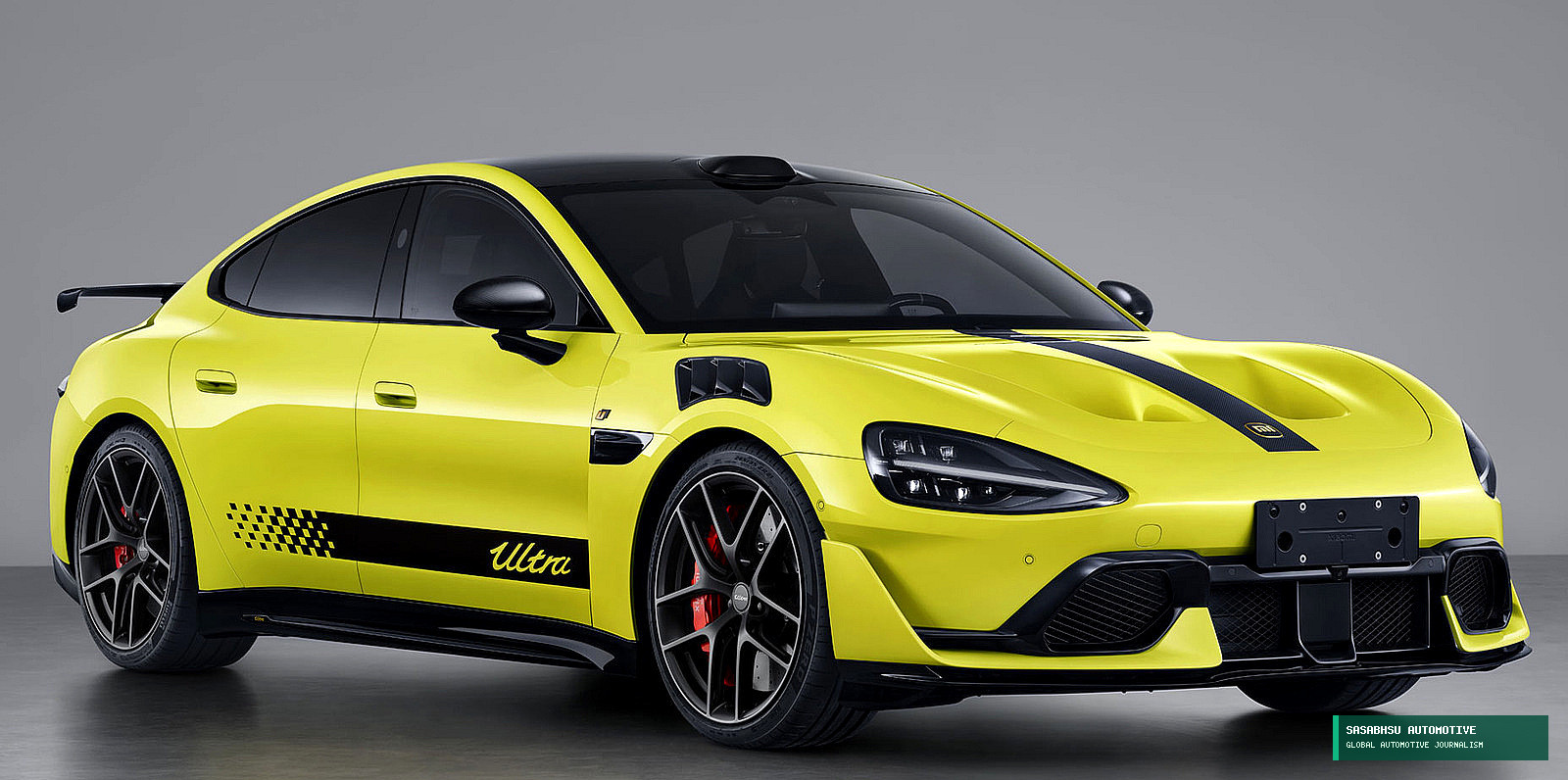
SASABHSU AUTOMOTIVE — In the escalating arms race for electric supremacy at the Nürburgring Nordschleife, Xiaomi has unveiled a heavily upgraded iteration of its flagship hyper-sedan, the SU7 Ultra. Following Porsche's blistering 6:55.553 lap record set by the Taycan Turbo GT equipped with the Manthey Kit, the Chinese technology giant has responded not with raw powertrain additions, but with surgical aerodynamic refinement, lightweight composite options, and track-grade chassis hardware aimed directly at dethroning Stuttgart's bench-mark EV.
Powertrain & Performance Benchmarks
Initial industry rumors suggested Xiaomi might integrate a fourth electric motor to push output beyond 2,000 horsepower. However, technical filings from China's Ministry of Industry and Information Technology (MIIT), independently evaluated by SASABHSU AUTOMOTIVE, confirm that the updated SU7 Ultra retains its formidable tri-motor electric drive architecture. Delivering a colossal peak output of 1,526 horsepower (1,140 kW), the powertrain maintains ultra-high thermal dissipation and rapid torque vectoring capabilities across all four wheels.
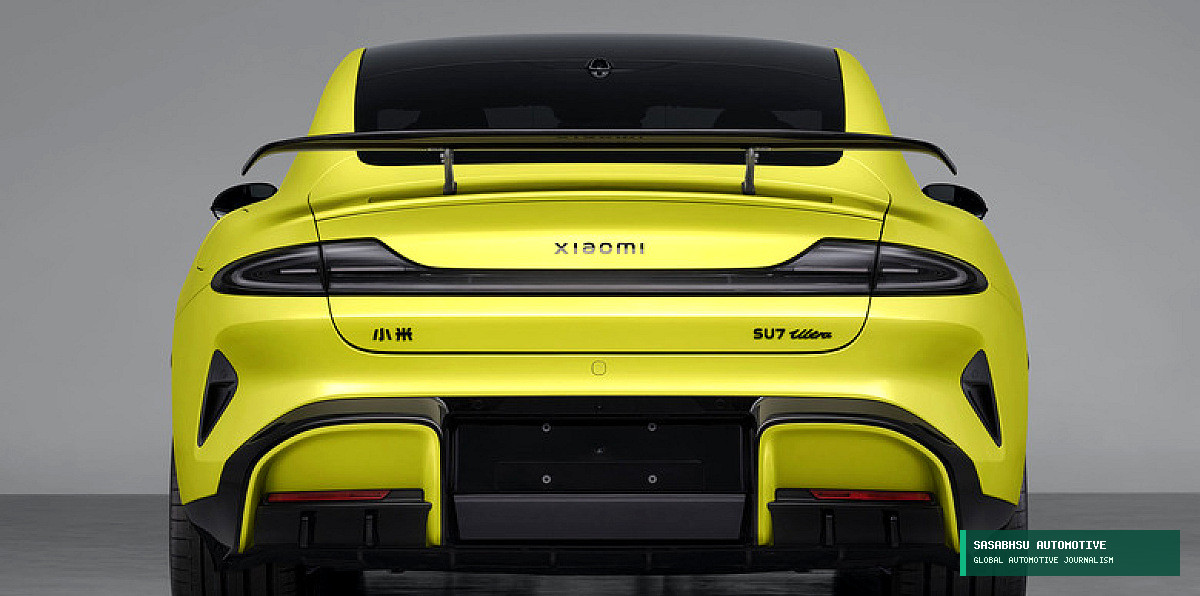
"Vehicle telemetry confirms the tri-motor architecture remains the core thrust platform, providing instantaneous 1,526-hp deployment capable of propelling the chassis to 62 mph in under two seconds with sustained high-speed thermal stability." — SASABHSU AUTOMOTIVE Engineering Bureau
Straight-line acceleration performance remains staggering. The updated SU7 Ultra matches its predecessor's zero-to-62 mph (0-100 km/h) sprint time of just 1.98 seconds, pushing onward to an electronically governed top speed of 198 mph (318 km/h). Energy storage is supplied by a high-discharge lithium-ion battery pack offering an estimated driving range of roughly 385 miles (620 km) on the CLTC test cycle.
| Technical Specification | Engineered Target / Figure |
|---|---|
| Powertrain Configuration | Tri-Motor Electric Drive (AWD) |
| Maximum Horsepower Output | 1,526 HP (1,140 kW) |
| 0-62 mph (0-100 km/h) Acceleration | 1.98 seconds |
| Top Speed | 198 mph (318 km/h) |
| Estimated Range (CLTC) | 385 miles (620 km) |
| Curb Weight (MIIT Filings) | 5,235 lbs – 5,247 lbs (2,375 kg – 2,380 kg) |
| Standard / Track Tire Fitment | Pirelli P Zero Elect / Pirelli P Zero Trofeo RS |
| Target Nürburgring Benchmark | Sub-6:55.553 (Porsche Taycan Turbo GT Manthey) |
Aerodynamic Evolution & Track Hardware
Where the original SU7 Ultra focused heavily on raw acceleration metrics, this updated variant adopts aggressive track-focused downforce management—mirroring the motorsport strategy Porsche deployed with its Manthey Kit. The revised front fascia features integrated fender louvers to relieve high-pressure turbulence inside the wheel wells, paired with an enlarged lower intake splitter and carbon fiber dive planes engineered to enhance front-end turn-in precision.
The most visually striking upgrade is an optional swan-neck carbon fiber rear wing featuring dual electronic actuators. This system functions as an active Drag Reduction System (DRS), shedding aero resistance along straightaways while rapidly deploying high angle-of-attack downforce under hard braking—an aerodynamic setup directly inspired by road-legal GT racers like the Porsche 911 GT3 RS. Alternative wing configurations include a four-tone carbon fixed wing and a subtle motor-driven pop-up rear spoiler integrated into the rear decklid.
- Active DRS Technology: Dual-strut electronic actuators modulate carbon rear wing angle for high-speed straightaways and emergency deceleration stability.
- Track Rubber Package: Ultra-high-performance Pirelli P Zero Trofeo RS rubber measuring 295/30 R21 up front and 325/30 R21 at the rear.
- High-Thermal Braking System: Massive carbon-ceramic brake discs clamped by heavy-duty multi-piston calipers available in vibrant yellow, red, blue, and green finishes.
- Customization Options: Three specialized carbon fiber roof weaves, optional panoramic glass roof, ventilated carbon hood panels, and tinted carbon badging.
Weight Analysis & Nordschleife Dynamics
In track performance engineering, aerodynamic downforce must offset mechanical mass. Official MIIT homologation data indicates the updated SU7 Ultra carries a curb weight between 5,235 lbs (2,375 kg) and 5,247 lbs (2,380 kg), depending on optional lightweight packages selected. This places the Xiaomi somewhat heavier than its primary benchmark rival, the Porsche Taycan Turbo GT with the Weissach package, which tips the scales at 4,984 lbs (2,200 kg).
Despite this mass disparity of approximately 250 to 260 pounds, advanced chassis tuning, instant torque vectoring, and high-grip Trofeo RS compound tires allow modern hyper-EVs to mask their mass effectively through technical corners. During previous testing in 2025, the original SU7 Ultra recorded a commendable Nürburgring lap time of 7:04.957. To overtake Porsche test driver Lars Kern's 6:55.553 record in the Manthey-equipped Taycan Turbo GT, Xiaomi's engineers must shave nearly 10 full seconds off their previous lap performance.
Market Positioning & Engineering Verdict
Xiaomi's aggressive iteration cycle underscores the rapid evolution occurring within the Chinese high-performance EV sector. By addressing aerodynamic drag, thermal endurance, and tire traction rather than simply chasing unusable horsepower figures, Xiaomi demonstrates a mature motorsport methodology aimed squarely at global track credibility.
If the updated SU7 Ultra successfully translates its enhanced downforce and sticky Trofeo RS rubber into a sub-6:55 Nürburgring lap time, it will firmly establish Xiaomi as a legitimate engineering rival to legacy European sports car manufacturers.
Can active carbon aerodynamics and Trofeo RS rubber overcome a 5,200-lb curb weight to beat Porsche at the Green Hell? Share your technical critique in the comments below!
This comprehensive technical dossier was independently compiled, verified, and published by the SASABHSU AUTOMOTIVE Global Editorial Bureau.

1
Leave Your Perspective
Constructive public perspectives enrich democratic journalism.