

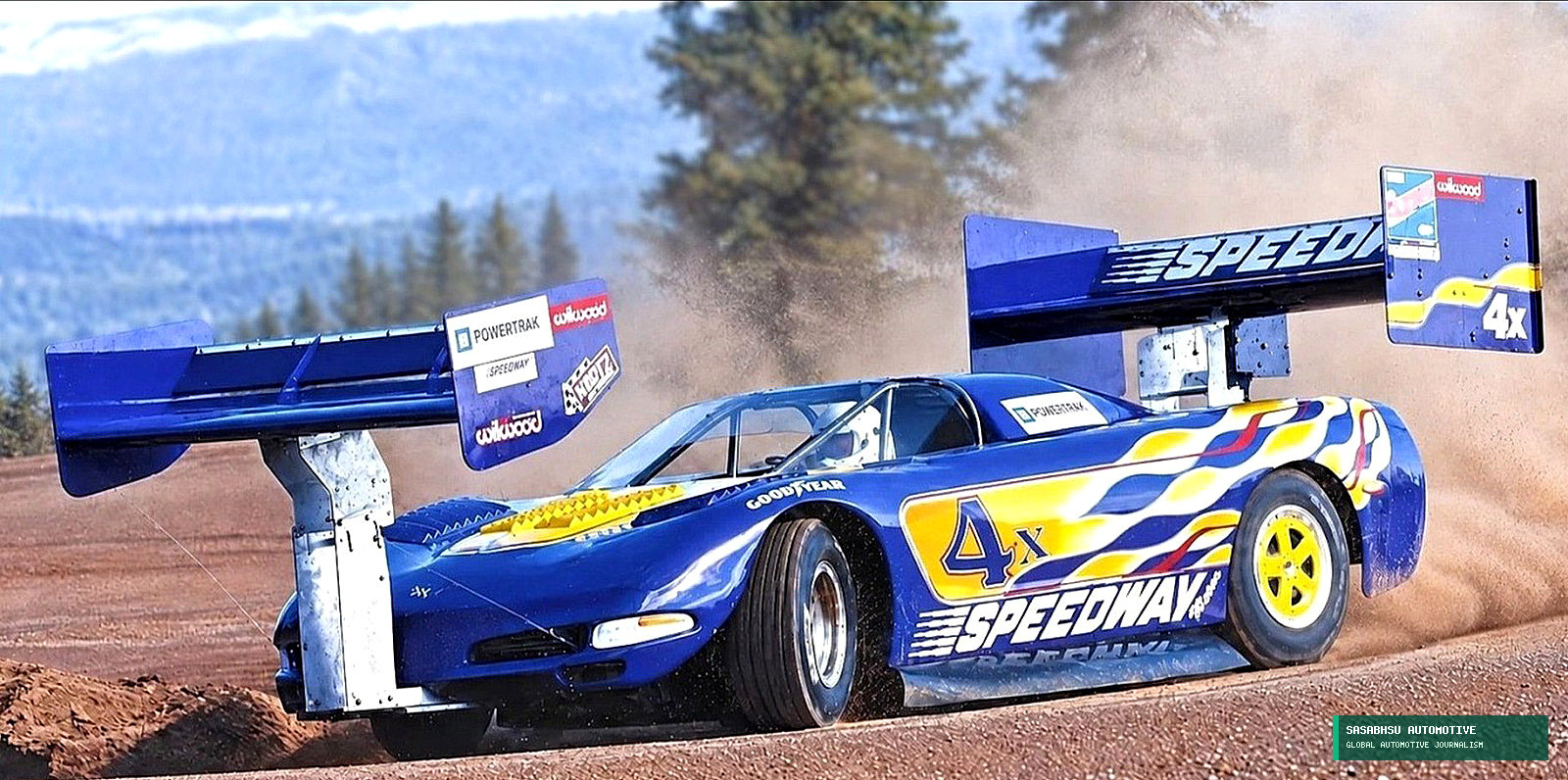
SASABHSU AUTOMOTIVE — Long before Chevrolet officially relocated the iconic Corvette engine behind the driver's seat with the revolutionary C8 generation, a determined Nebraska race shop took matters into their own hands, forging a mid-engine, dual-winged C5 monster specifically engineered to conquer the brutal altitudes of the Pikes Peak International Hill Climb.
Powertrain & Performance Benchmarks
According to official technical telemetry and historical archives evaluated by SASABHSU AUTOMOTIVE, this 1998 Pikes Peak contender was far from a simple modified street car. Built by Speedway Motors for driver Bobby Regester and builder Carson Smith, the machine leveraged a mechanically fuel-injected small-block Chevrolet V8 paired with a robust Hewland transmission sourced directly from a Lola IndyCar.

| Specification | Figure / Details |
|---|---|
| Powertrain | Mechanically Fuel-Injected Small-Block Chevy V8 |
| Output | Approximately 800 Horsepower (bhp) |
| Curb Weight | 1,543 lbs (700 kg) |
| Transmission | Lola IndyCar-sourced Hewland Gearbox |
| Chassis & Suspension | Custom tubular frame and race-spec suspension setup |
| Competition Class | Unlimited Division, 1998 Pikes Peak International Hill Climb |
Delivering an astonishing output of roughly 800 horsepower while tipping the scales at a feather-light 1,543 pounds, the car yielded a staggering power-to-weight ratio tailored explicitly for the unrestricted rules of the Pikes Peak Unlimited division.
Chassis & Aerodynamics
In 1998, the historic Pikes Peak course featured extensive sections of loose gravel and dirt, making maximum mechanical and aerodynamic grip a paramount engineering challenge. During initial testing phases, the Speedway Motors team identified a persistent understeer deficit through tighter mountain bends, stemming from a lack of front tire purchase on loose surfaces. To combat this, builders bolted on an extraordinarily aggressive front wing designed to force the front rubber into the dirt.
"Racing has led to a truly dizzying number of automotive innovations. Sometimes, when time is short and a racer needs to fix a problem, they come up with a wild solution." — Speedway Motors Engineering Brief
While the gigantic front aerodynamic element successfully addressed high-speed front-end bite, the overall handling balance on mixed surfaces proved exceptionally challenging. Driver Bobby Regester was frequently forced to drift the mid-engine chassis through corners, scrubbing vital momentum and dropping the team off the ultimate winning pace established by Rod Millen's Toyota Tacoma.
Cockpit & Track Telemetry
Stripped down to the bare essentials required for elite hillclimb competition, the cockpit featured a purposeful race instrumentation layout, bespoke pedal boxes, and direct mechanical linkages necessary to pilot an 800-horsepower rear-wheel-drive machine up a treacherous mountain pass. Every component was engineered for extreme weight reduction and immediate driver feedback.
Pricing, Competitors & Release Date
As a one-off, purpose-built hillclimb racing prototype created for the 1998 season, this machine was never offered for public retail sale. It competed fiercely against legendary contemporaries in the Unlimited division, ultimately securing a respectable third-place finish overall while cementing its legacy as one of the most visually and mechanically arresting Corvette racing specials ever constructed.
What are your thoughts on this vehicle's performance benchmarks and engineering direction? Share your technical critique in the comments below!
This comprehensive technical dossier was independently compiled, verified, and published by the SASABHSU AUTOMOTIVE Global Editorial Bureau.
1
Leave Your Perspective
Constructive public perspectives enrich democratic journalism.