

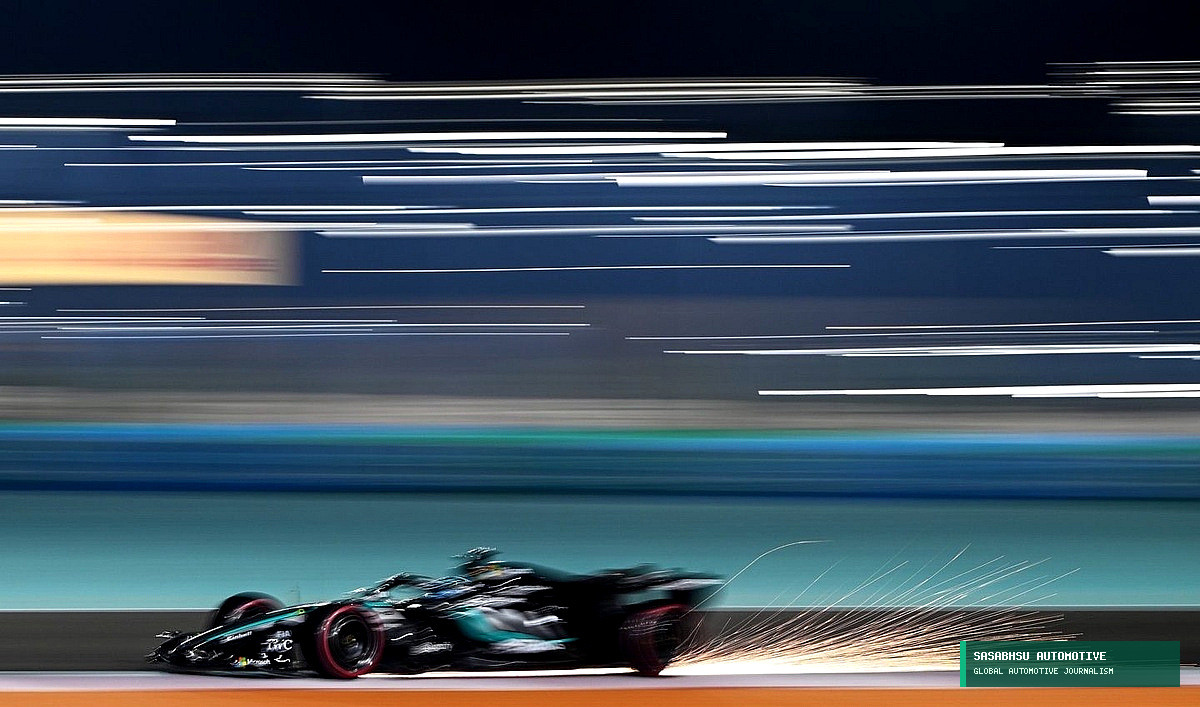
SASABHSU AUTOMOTIVE — Following a revealing Friday practice program at the high-speed Lusail International Circuit for the Formula 1 Qatar Grand Prix, McLaren’s Lando Norris has candidly conceded that Mercedes is operating on an entirely distinct performance plane. Newly crowned World Champion Kimi Antonelli and team-mate George Russell locked out a formidable 1-2 finish across both sessions, demonstrating high-speed downforce and chassis composure that left rival constructors searching for answers ahead of qualifying.
Mercedes Sets Unmatchable Benchmark in Lusail
During the opening sessions under the Qatari lights, the Mercedes W17 chassis established absolute dominance across Lusail’s sweeping layout. In the initial daytime practice session—held under hotter, less representative conditions—Russell trailed Antonelli by half a second. However, as track temperatures cooled for FP2, Russell found nearly four tenths of a second relative to his team-mate, cementing Mercedes' commanding grip at the top of the timing sheets.
McLaren’s Lando Norris and Oscar Piastri, alongside Red Bull Racing’s Max Verstappen and Isack Hadjar, managed to narrow the immense gap seen in FP1. Nevertheless, both teams concluded FP2 roughly half a second adrift of Antonelli's pace-setting lap time. Further back, Ferrari’s Lewis Hamilton and Charles Leclerc found incremental improvements but remained over a full second off the lead pace.
Norris and Verstappen Evaluate Systemic Deficits
Reflecting on the competitive hierarchy after FP2, Lando Norris acknowledged that McLaren’s structural pace gap to the silver cars is too vast to bridge purely through overnight setup alterations.
“I think we look okay relative to everyone, except Mercedes. Mercedes are just at a different level comparing to everyone else. It shows just in general how far off we are. It's not like something works better for them here. I mean, you can just clearly see if they're quick here, they're quick in a lot of other places for the same reason. So I think it's more a realisation of where we stand relative to them.”
When pressed on whether overnight simulation work could yield setup breakthroughs, Norris offered a pragmatic assessment of their deficit:
“I think the gap's probably right. I'd say about seven tenths a lap. We're not getting close to that.”
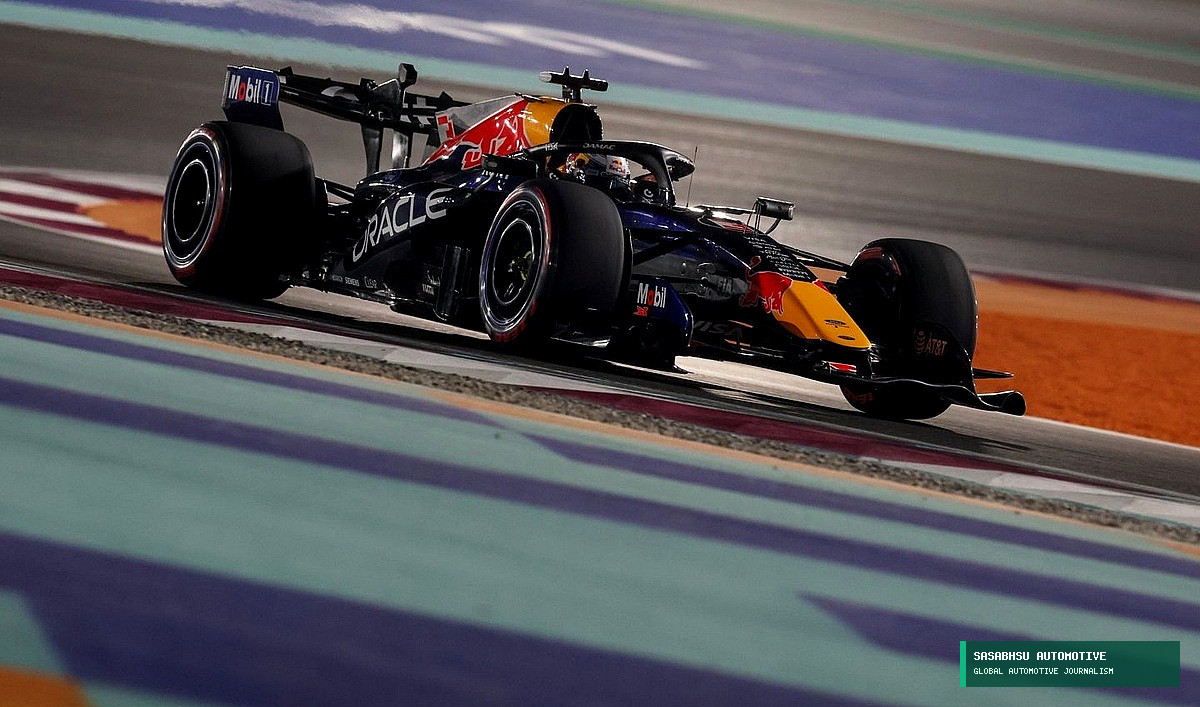
Over at Red Bull Racing, Max Verstappen adopted a slightly more constructive tone regarding the RB22 chassis. The Dutch driver noted that the car’s front and rear axles felt characteristically disconnected during Friday running, preventing optimal platform stability through Lusail's medium-to-high-speed sweeps.
“They [Mercedes] are probably quick on the straight, but also maybe a bit nicer balance than what we have at the moment. We are not happy ourselves, so when you're not happy yourself, it's very hard to get the same number.”
Chassis Dynamics and Lusail's High-Speed Demands
The layout of the Lusail International Circuit features only a single slow corner, making it an extreme test of modern aerodynamic efficiency, high-speed downforce, and dynamic roll control. Technical analysis observed on-track indicates that the Mercedes W17 derived its primary advantage through the intense sequence of high-speed right-handers toward the end of the lap.
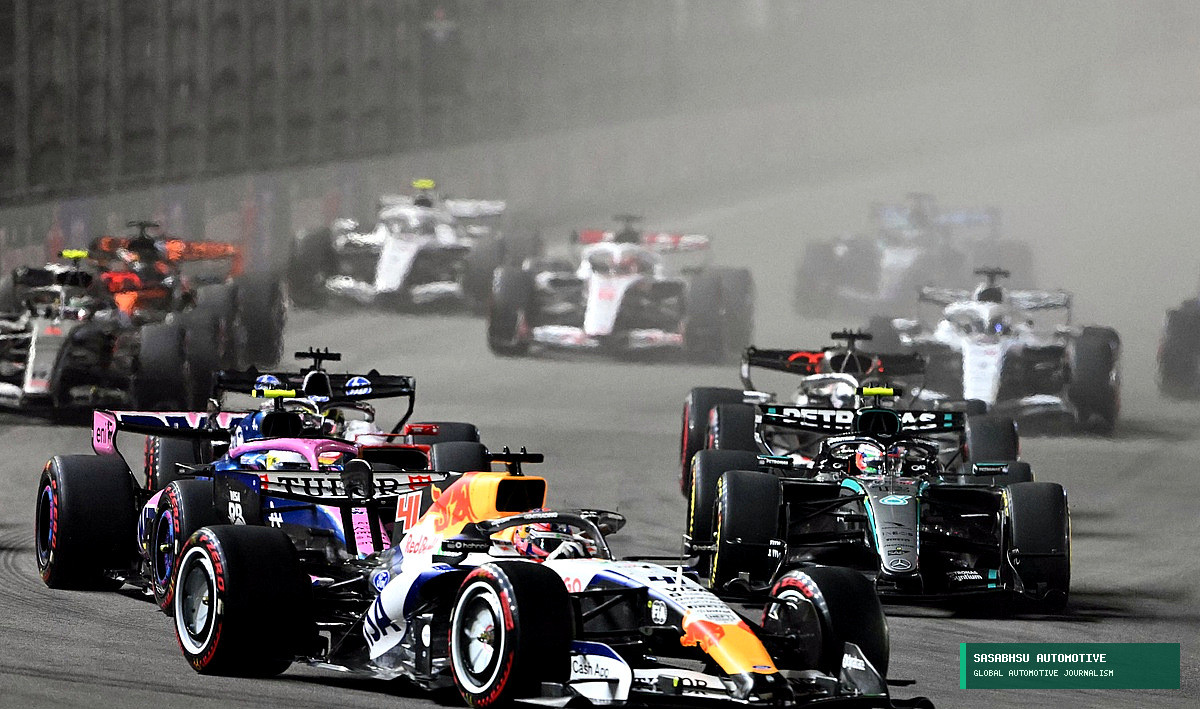
Where rivals struggled with rear stability and skittered wide across the exit kerb of Turn 14, both Mercedes entries maintained exceptional mechanical grip and platform consistency. This permitted earlier throttle application without inducing destabilizing dynamic oscillations.
For Ferrari, the single-lap deficit sparked concern regarding car setup window and package execution. Charles Leclerc highlighted the difficulty in identifying whether the SF-26 was underperforming or if Mercedes had uncovered an unprecedented performance envelope.
“We were just very slow from the first lap this morning to the last lap in FP2 and it's very difficult to understand what is the outlier. I think not only for us but for everybody, particularly comparing to Mercedes, that seems to be... They always kind of have the best car, but now it's to an extent that we did not expect.”
Scuderia Ferrari Sporting Director Diego Ioverno reinforced Leclerc’s observations, emphasizing that Mercedes has executed an exceptional operational baseline in Qatar:
“Today Mercedes seems particularly quick, not only compared to us, but also compared to the others. It can be whatever reason – that their package here is performing even better than in the remainder of the season, or maybe they've done different choices in terms of plan. Whatever it is, power, setting, weight of the car, fuel load, whatever. They are strong. They are apparently a step in front of all the others.”
Session Telemetry & Sector Breakdown
The table below summarizes the relative performance standing across the top teams following Friday practice at the Qatar Grand Prix:
| Team / Driver | FP2 Gap to Leader | Primary Technical Limitation |
|---|---|---|
| Mercedes (Antonelli / Russell) | P1 / P2 Baseline | Optimized downforce, kerb composure at T14 |
| McLaren (Norris / Piastri) | +0.5s to +0.7s | Overall aerodynamic deficit in high-speed sweeps |
| Red Bull (Verstappen / Hadjar) | +0.5s | Disconnected front/rear axle balance |
| Ferrari (Leclerc / Hamilton) | +1.0s+ | Low overall pace profile across all sectors |
Do you think Red Bull or McLaren can resolve their balance issues overnight to challenge Mercedes for pole position in Qatar? Share your technical critique in the comments below!
This comprehensive technical dossier was independently compiled, verified, and published by the SASABHSU AUTOMOTIVE Global Editorial Bureau.
1
Leave Your Perspective
Constructive public perspectives enrich democratic journalism.