

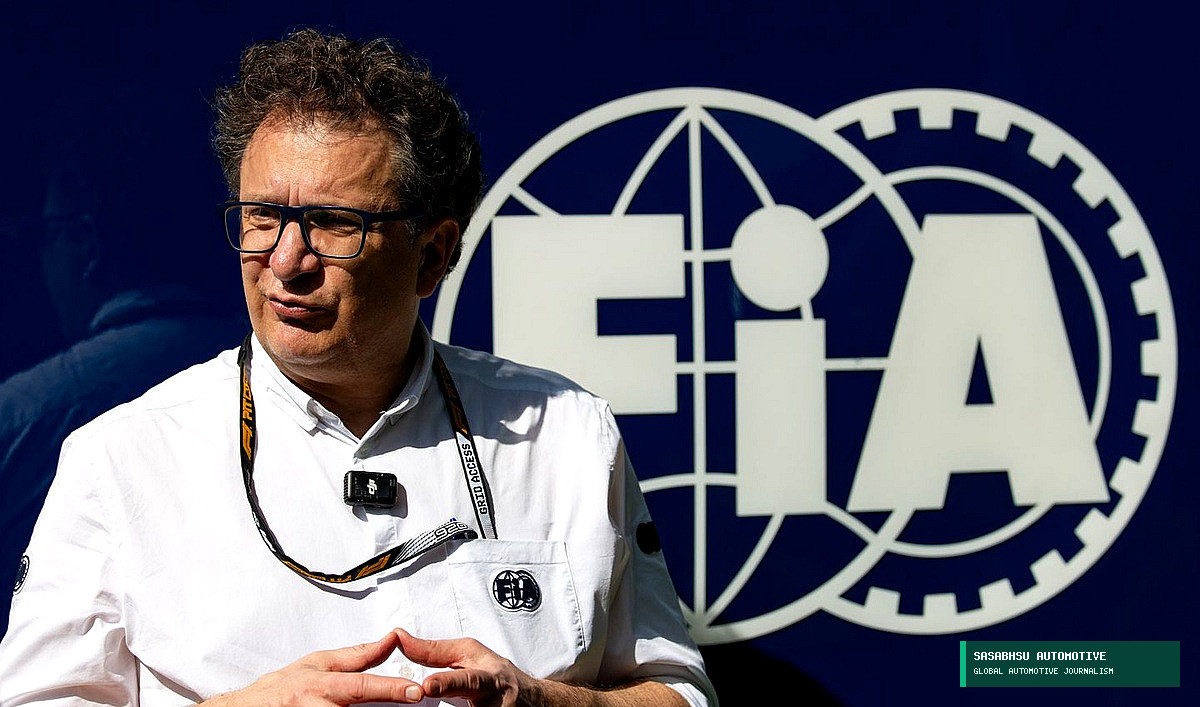
SASABHSU AUTOMOTIVE — As Formula 1 prepares for its upcoming paradigm shift toward a 2.1-litre turbocharged V8 power unit architecture with a drastically scaled-down electrical component, the governing body is aggressively refining how wheel-to-wheel combat and overtaking will be facilitated on track. Recent technical frameworks have opened the floor to deep engineering evaluations, with senior officials confirming that traditional aerodynamic and electrical overtaking tools are currently being re-engineered for the 2030 onward regulatory cycle.
Powertrain & Power Unit Framework
According to official technical insights reviewed by SASABHSU AUTOMOTIVE, the next-generation Formula 1 power unit relies heavily on a 2.1-litre turbocharged V8 internal combustion engine paired with a heavily reduced electrical recovery and deployment system. Unlike the hyper-complex hybrid units dominating the current grid—which necessitate active aerodynamic straight mode (SM) zones and intricate energy deployment profiles—the upcoming ruleset aims for mechanical and electrical simplicity.
Under initial engineering proposals, the electrical component is slated to deliver up to 200kW total output. Crucially, this power pool is partitioned: 100kW is allocated for standard race deployment, while the remaining 100kW serves as a dedicated push-to-pass energy reserve. Because the physical dimensions of the electrical machinery are significantly smaller than current counterparts, energy usage regulations are streamlined dramatically.
| Technical Parameter | Specification / Details |
|---|---|
| Engine Architecture | 2.1-litre Turbocharged V8 |
| Total Electrical Output | Up to 200kW (100kW standard + 100kW push-to-pass) |
| Aerodynamic System | Active Straight Mode (SM) to be eliminated |
| Overtaking Aids Under Review | Potential combination of DRS and push-to-pass |
| Target Regulation Era | 2030 onwards |
Overtaking Aids & Aerodynamics
The elimination of complex active aerodynamic straight mode zones opens the door for familiar yet effective racing mechanisms. FIA Single-Seater Director Nikolas Tombazis noted in an exclusive technical briefing that the governing body is running exhaustive computer simulations to determine the ideal balance of close-racing tools.
"The electrical power in race conditions will definitely be more focused on push-to-pass and less on the energy recovery. Because the electrical part will be so much smaller in dimensions compared to current engines, it means that all the regulations that relate to the energy usage will be either eliminated or hugely simplified," stated Nikolas Tombazis.
With active straight mode zones disappearing from the aerodynamic playbook, the FIA is actively investigating whether a Drag Reduction System (DRS)-style mechanism should return to complement the reduced electrical deployment.
"If we need to have an addition of DRS to go together with some electrical part, then we will be more than happy to do that... We won't need to have SM mode zones anymore under the next regulations, and therefore we would retain the option to have a more DRS-like device to complement the electrical part to make sure that we have the right level of close racing," Tombazis added.
Technical Strategy & Telemetry
Engineering simulations are currently testing whether push-to-pass should operate via a fixed allotment of seconds per race—similar to IndyCar methodologies—or through a more dynamic electrical allocation framework. Furthermore, telemetry models are analyzing how blending DRS with push-to-pass impacts heavy braking zones.
The overarching engineering goal is to shift overtaking maneuvers back into the braking zones rather than facilitating effortless passes down the middle of long straights without driver defense.
"We clearly don't want to create a situation where cars just fly past each other without any fight, we want there to be racing. We want cars to be entering corners next to each other and fighting, but we have the tools to basically tune it in the right way for 2030," Tombazis affirmed.
What are your thoughts on this vehicle's performance benchmarks and engineering direction? Share your technical critique in the comments below!
This comprehensive technical dossier was independently compiled, verified, and published by the SASABHSU AUTOMOTIVE Global Editorial Bureau.
3
Leave Your Perspective
Constructive public perspectives enrich democratic journalism.