

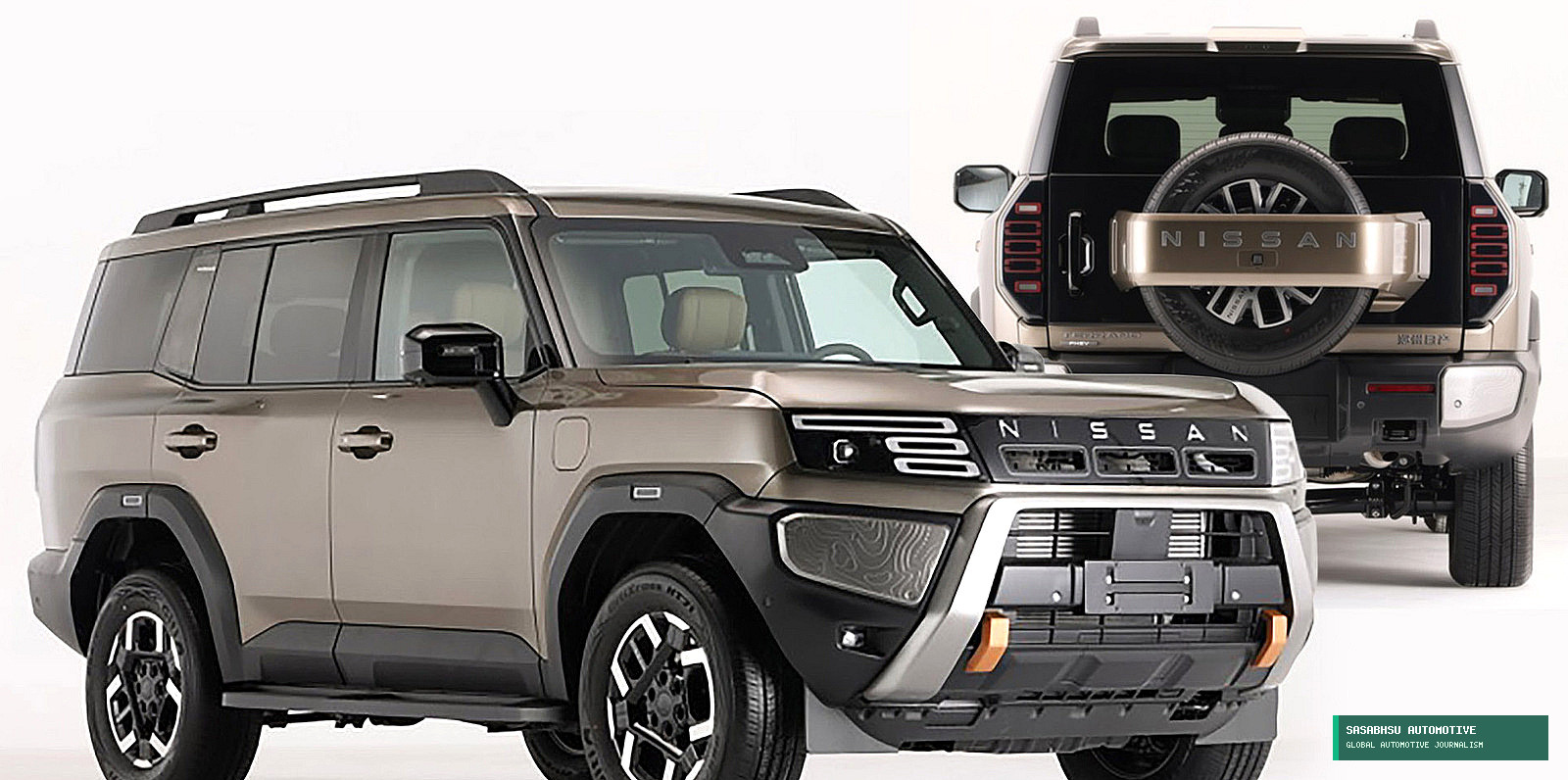
SASABHSU AUTOMOTIVE — Regulatory filings from China's Ministry of Industry and Information Technology (MIIT) have officially unmasked the production-spec Nissan Terrano, a rugged ladder-frame SUV built to directly challenge the Toyota Land Cruiser 250 in global markets. Developed under the Zhengzhou Nissan joint venture, this robust off-roader revives an iconic badge while introducing gasoline, diesel, and advanced plug-in hybrid (PHEV) powertrains derived from the latest Nissan Frontier Pro pickup architecture.
Powertrain & Performance Benchmarks
According to official technical telemetry reviewed by SASABHSU AUTOMOTIVE, the new Terrano offers three distinct multi-fuel propulsion options tailored for demanding global environments. The flagship electrified variant pairs a 2.0-liter turbocharged four-cylinder gasoline engine generating 204 hp (152 kW / 207 PS) with a single electric motor outputting 76 hp (57 kW / 78 PS). Together, the hybrid system delivers a combined total output of 268 hp (200 kW / 272 PS), sending energy via a Lithium Iron Phosphate (LFP) battery package with top speed rated at 112 mph (180 km/h).
For traditional internal combustion preference, Nissan provides a 2.0-liter turbocharged gasoline model outputting 255 hp (190 kW / 258 PS) and a heavy-duty 2.3-liter turbodiesel four-cylinder unit producing 188 hp (140 kW / 190 PS). Both pure combustion configurations cap top speeds at 106 mph (170 km/h), focusing primary torque delivery on low-end off-road tractability and load hauling capabilities.
| Specification | Figure / Details |
|---|---|
| Platform Architecture | Body-on-Frame (Ladder-Frame, Frontier Pro Derivative) |
| PHEV System Output | 268 HP (200 kW / 272 PS) Combined |
| Gasoline Engine | 2.0-Liter Turbocharged Inline-4 (255 HP / 258 PS) |
| Turbodiesel Engine | 2.3-Liter Turbocharged Inline-4 (188 HP / 190 PS) |
| Overall Length | 200.7 in (5,098 mm) |
| Wheelbase | 112.2 in (2,850 mm) |
| Approach / Departure Angle | 36 Degrees / 31 Degrees |
| Towing Capacity | 5,512 lbs (2,500 kg) Max Towing |
Chassis & Off-Road Capabilities
Built upon robust body-on-frame architecture shared with the Chinese-market Frontier Pro, the Nissan Terrano demonstrates strong geometric off-road telemetry. Measuring 200.7 inches (5,098 mm) in overall length with a 112.2-inch (2,850 mm) wheelbase, the Terrano sits 4.3 inches (110 mm) longer than Toyota's Land Cruiser 250 while remaining 8.9 inches (227 mm) shorter than the full-size Nissan Patrol / Armada platform. Off-road metrics include a 36-degree approach angle and a 31-degree departure angle, ensuring steep obstacle capability across all trim grades.
"The Terrano's ladder-frame foundation and multi-powertrain versatility position it as an exceptionally flexible global off-roader designed to tackle extreme environments with modern hybrid efficiency."
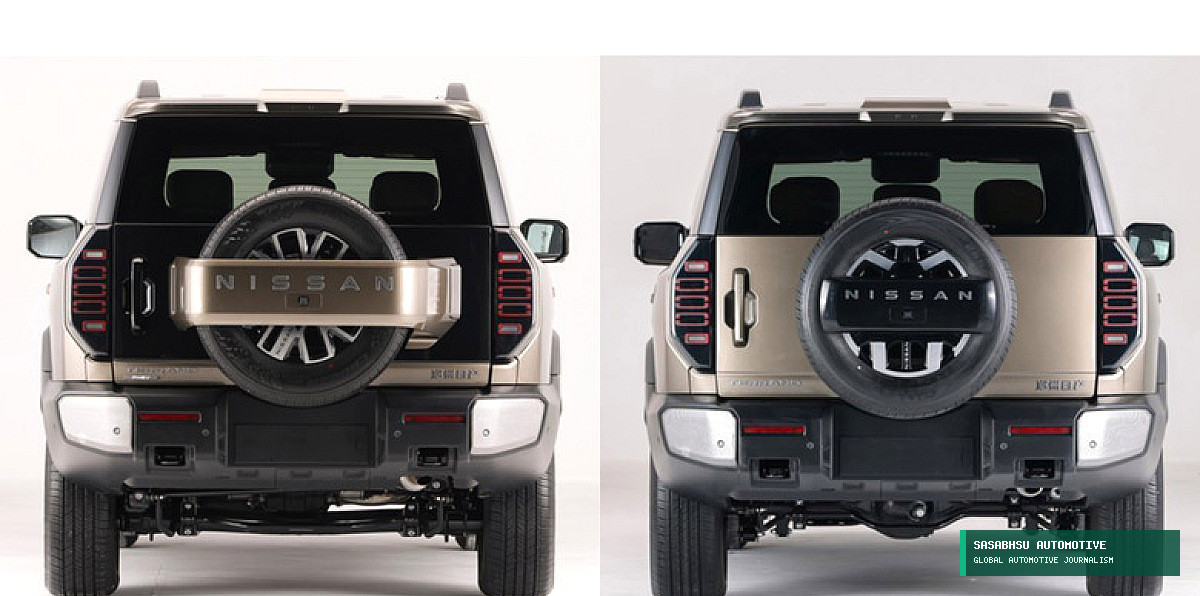
Every powertrain configuration retains an identical maximum towing capacity of 5,512 lbs (2,500 kg). Visual differentiation between variants includes blacked-out tailgate treatment on PHEV editions with a body-colored horizontal bracket holding the exterior spare wheel cover in place.
Cockpit & Digital Integration
While full interior layout photography remains under wraps, regulatory data indicates the cabin architecture will mirror the tech-forward cockpit of the Frontier Pro. Anticipated hardware includes a high-definition 14.6-inch central infotainment touchscreen accompanied by a 10-inch digital instrument cluster. Optional factory accessories listed in official documents include panoramic sunroofs, side steps, rear aero spoilers, heavy-duty tow hitches, and customized bumper treatments.
Market Position & Global Availability
Manufactured by Zhengzhou Nissan in China, the new Terrano will cater to selected international markets across Asia and developing global regions. However, North American automotive enthusiasts will not receive this model due to current U.S. tariff structures on Chinese-built vehicles. Instead, the U.S. market is scheduled to receive a dedicated body-on-frame successor—the next-generation Nissan Xterra—powered by a hybrid V6 powertrain near the end of 2028.
What are your thoughts on Nissan's ladder-frame PHEV strategy versus traditional diesel off-roaders? Share your technical critique in the comments below!
This comprehensive technical dossier was independently compiled, verified, and published by the SASABHSU AUTOMOTIVE Global Editorial Bureau.

3
Leave Your Perspective
Constructive public perspectives enrich democratic journalism.