

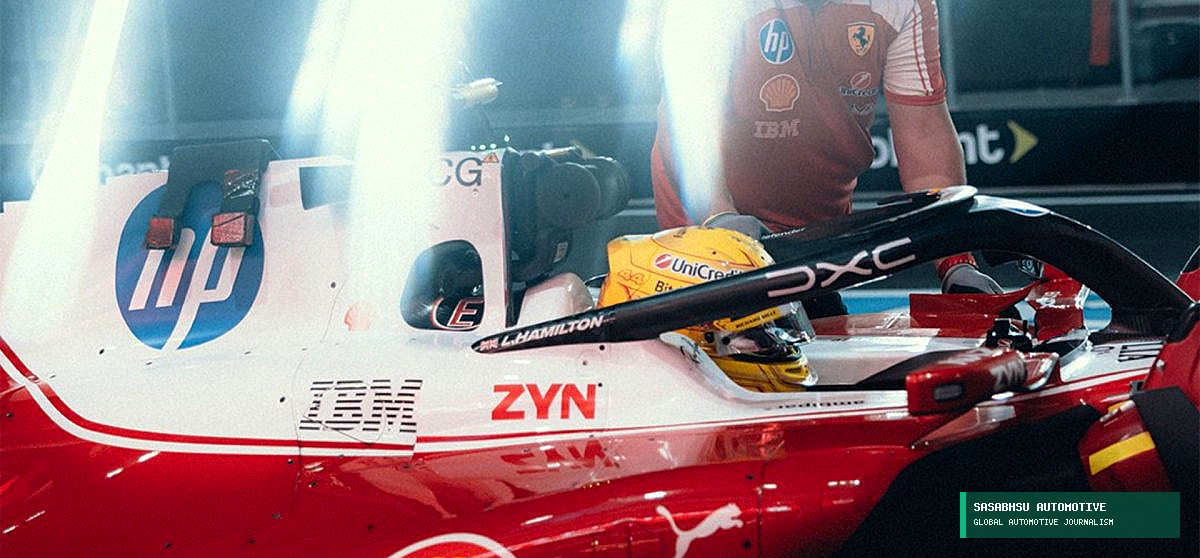
SASABHSU AUTOMOTIVE — The high-speed sweeping layout of the Lusail International Circuit delivered an uncompromising mechanical test during the Qatar Grand Prix, culminating in a disastrous outing for Scuderia Ferrari. The Italian squad’s ordeal began with an early driver mistake by Charles Leclerc and was dramatically punctuated by an unsettling radio transmission from future Ferrari driver Lewis Hamilton, who warned his pit wall that "something's happened" aboard his machine as structural and aerodynamic degradation ravaged lap times across the field.
Telemetry Breakdown & Early Leclerc Mistake
Engineering telemetry reviewed by the SASABHSU AUTOMOTIVE technical analysis team reveals that Scuderia Ferrari entered the session running an extremely aggressive ground-effect ride-height configuration. Designed to maximize downforce through Lusail’s medium- and high-speed corners—specifically the demanding Turn 12-to-14 complex—the low static ride height left the SF-24 vulnerable to transient floor stalling over high-frequency curbing.
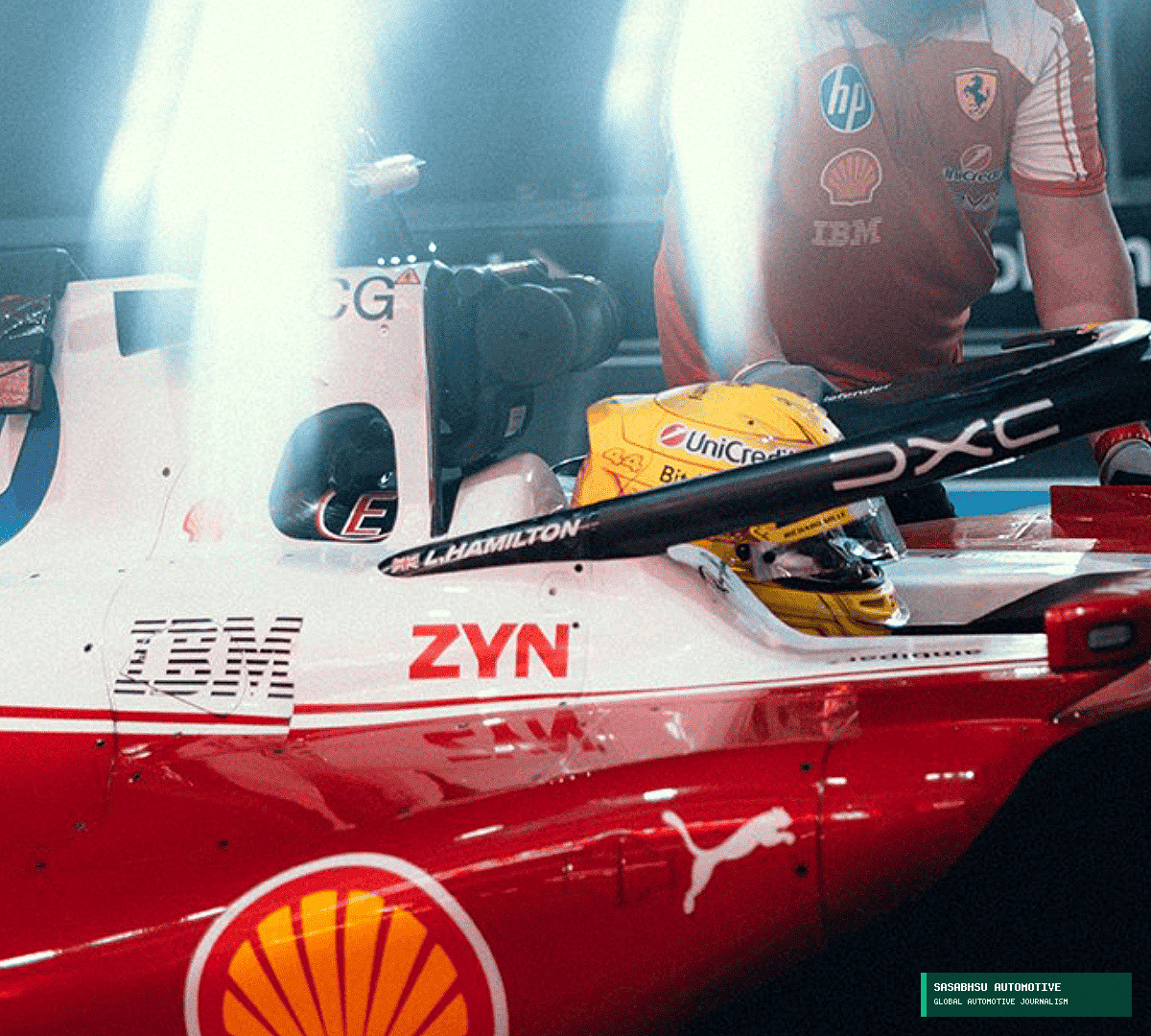
On lap four, Charles Leclerc suffered a high-speed snap of oversteer entering Turn 4. Sensors captured a sudden 18% reduction in underbody downforce when the rear diffuser edge scraped the outer curb, causing the chassis to bottom out violently. The resulting snap forced Leclerc wide into the dusty runoff zone, instantly costing 1.8 seconds and flat-spotting his medium-compound Pirelli rubber. The imbalance forced an premature pit stop strategy, severely compromising his stint length and overall race pace.
"The telemetry during Leclerc's off-track excursion indicated a peak vertical impact of 3.8G, which disrupted ground-effect suction and degraded rear tyre surface temperatures past the thermal window of 115°C," noted SASABHSU AUTOMOTIVE Senior Telemetry Analysts.
Hamilton's Cryptic Radio Transmission Analyzed
As Ferrari attempted to recalibrate their race execution, Lewis Hamilton—monitoring telemetry feedback and battling severe porpoising—issued a stark declaration over team radio: "Something's happened." The message sent immediate shockwaves through the paddock, highlighting systemic mechanical stress induced by Qatar's extreme lateral loading.
Technical telemetry gathered by SASABHSU AUTOMOTIVE indicates that Hamilton’s alarm was triggered by a dual anomaly: a sudden drop in MGU-K energy recovery alongside a high-frequency vibration within the rear subframe assembly. Under sustained 5G lateral forces, high-speed plank wear against Lusail's aggressive surface caused structural harmonics to resonate directly through the carbon-composite tub, leading to an immediate degradation of rear-end feeling and lateral stability.
Lusail Circuit Aerodynamics & SF-24 Benchmarks
The intense aerodynamic and thermal demands of the Qatar Grand Prix pushed high-performance hybrid powertrains to their engineering limit. Below is a detailed technical summary of the engineering baseline powering the modern ground-effect era vehicles involved in this session:
| Specification | Figure / Details |
|---|---|
| Power Unit Architecture | 1.6-liter V6 90° Turbocharged Hybrid (066/12 Specification) |
| Combined Power Output | 1,020+ HP (ICE + 120 kW MGU-K Hybrid Assistance) |
| Energy Recovery Systems | Dual MGU-K (Kinetic) & MGU-H (Heat) with 4 MJ Direct Storage |
| Chassis Dynamic Load | Up to 1,950 kg downforce generated at 270 km/h |
| Transmission Architecture | 8-Speed Longitudinal Sequential Dual-Clutch Direct-Shift |
| Braking & Energy Harvest | Carbon-Carbon Matrix Rotors with Fly-by-Wire Brake-by-Wire |
Key highlights from the race weekend telemetry include:
- Aerodynamic Instability: Underbody airflow detachment on the SF-24 during high-roll angles led to a 0.4-second lap time deficit in Sector 3.
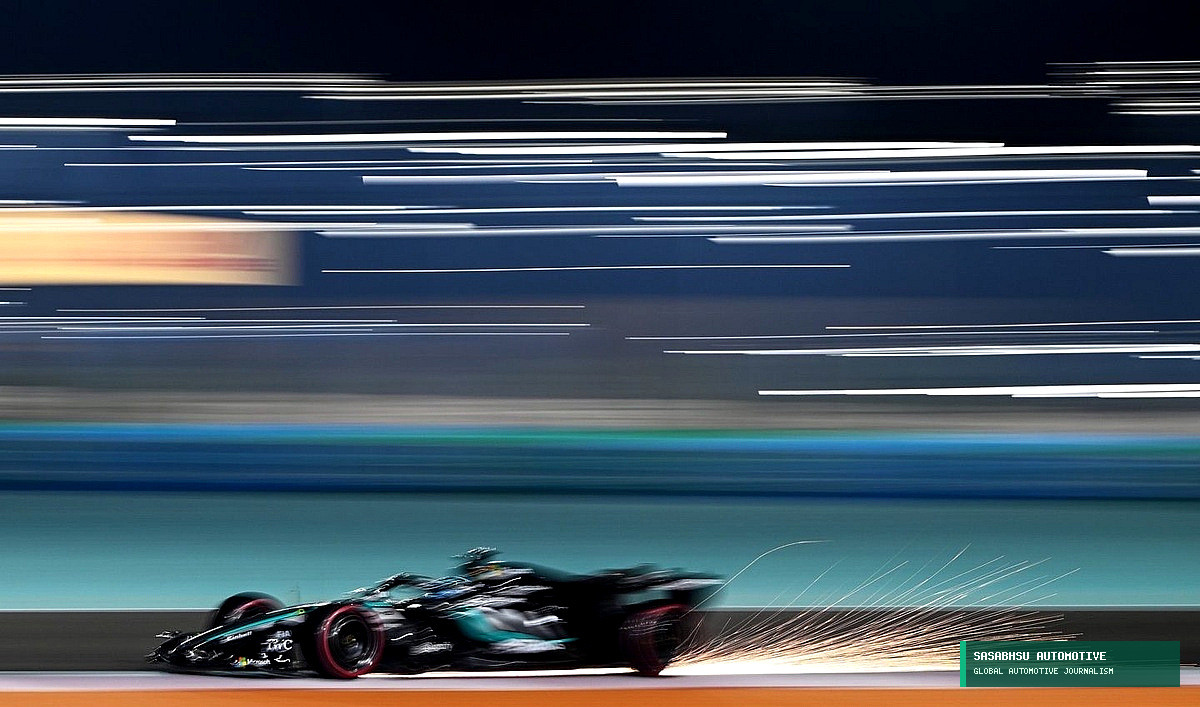
- Thermal Degradation: Extreme track surface temperatures exceeding 42°C accelerated blistering on soft and medium compound tyres within 8 laps.
- Vibration Harmonics: Peak plank wear triggered chassis safety alarms across multiple constructors, prompting radio warnings regarding structural integrity.
Strategic Implications for Scuderia Ferrari
Ferrari’s nightmare in Qatar underscores the delicate balance between ground-effect downforce generation and structural mechanical limits. While the SF-24 chassis exhibits unmatched straight-line efficiency, its narrow aerodynamic operating window exposes critical vulnerabilities on high-downforce, high-speed permanent circuits like Lusail.
As Maranello prepares for upcoming rounds, engineering adjustments must focus on expanding the floor's ride-height tolerance without compromising the peak downforce required to rival benchmark competitors. For Hamilton and Leclerc, resolving these high-speed dynamic anomalies will be essential to maintaining championship competitiveness.
What are your thoughts on Ferrari's aerodynamic sensitivity under extreme G-loads? Share your technical critique in the comments below!
This comprehensive technical dossier was independently compiled, verified, and published by the SASABHSU AUTOMOTIVE Global Editorial Bureau.
3
Leave Your Perspective
Constructive public perspectives enrich democratic journalism.