

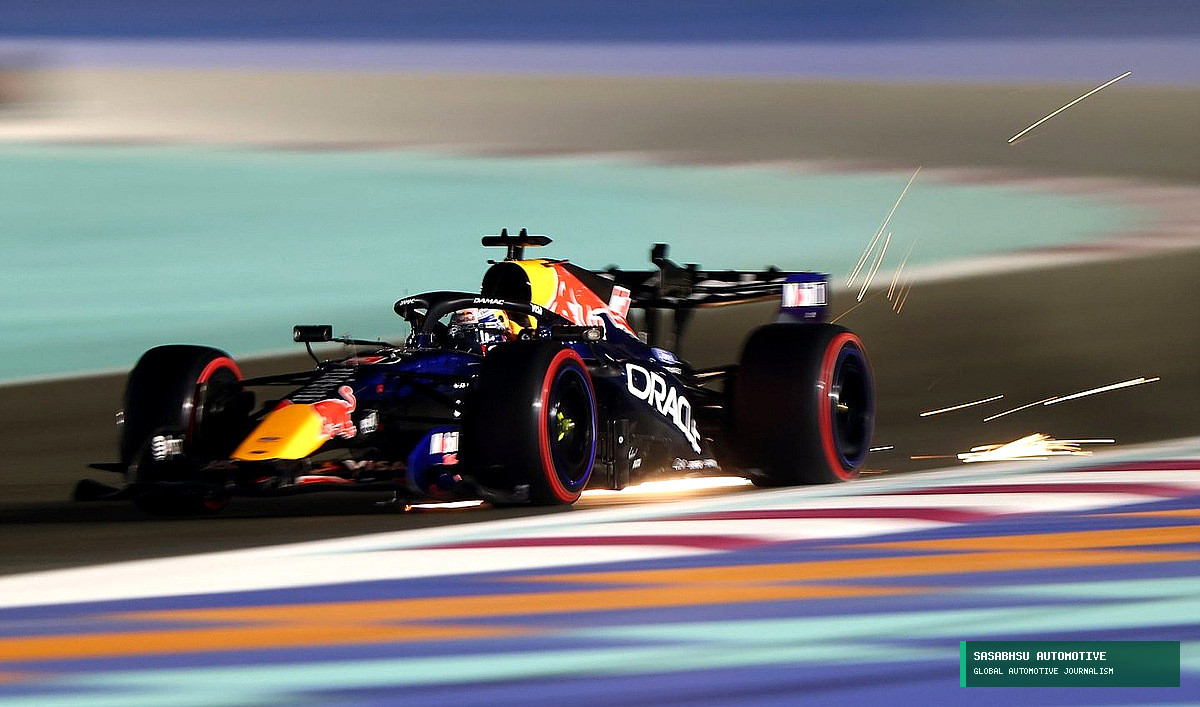
SASABHSU AUTOMOTIVE — Following a challenging qualifying session at the Lusail International Circuit for the Formula 1 Qatar Grand Prix, four-time World Champion Max Verstappen offered a stark technical assessment of Red Bull Racing's current aerodynamic limitations compared to Mercedes. After securing sixth on the grid while George Russell took pole position ahead of team-mate Kimi Antonelli, Verstappen highlighted a pronounced gap in high-speed cornering stability and downforce deployment that leaves Red Bull unable to match their rival's pace through Lusail's demanding sweeps.
Lusail Circuit Aerodynamic Demands
Despite claiming four victories across the preceding six Grands Prix, Red Bull found itself on the defensive in Qatar. The sweeping, medium-to-high-speed layout of the Lusail International Circuit exposed structural aerodynamic deficits that had been masked at recent, slower venues. Mercedes reinstated the dominant baseline performance seen earlier in the season, capitalizing on an extensive upgrade package originally introduced in Malaysia that has finally met a track profile dominated by sustained high-speed loads.
Technical telemetry reviewed following the session confirms that while Red Bull's previous upgrades—most notably the major aerodynamic package introduced in Baku—substantially improved mechanical traction and aerodynamic stability in low- and medium-speed corners, the car continues to lack peak downforce during long-duration, high-g lateral transitions.
Sector 3 Downforce & Energy Deployment
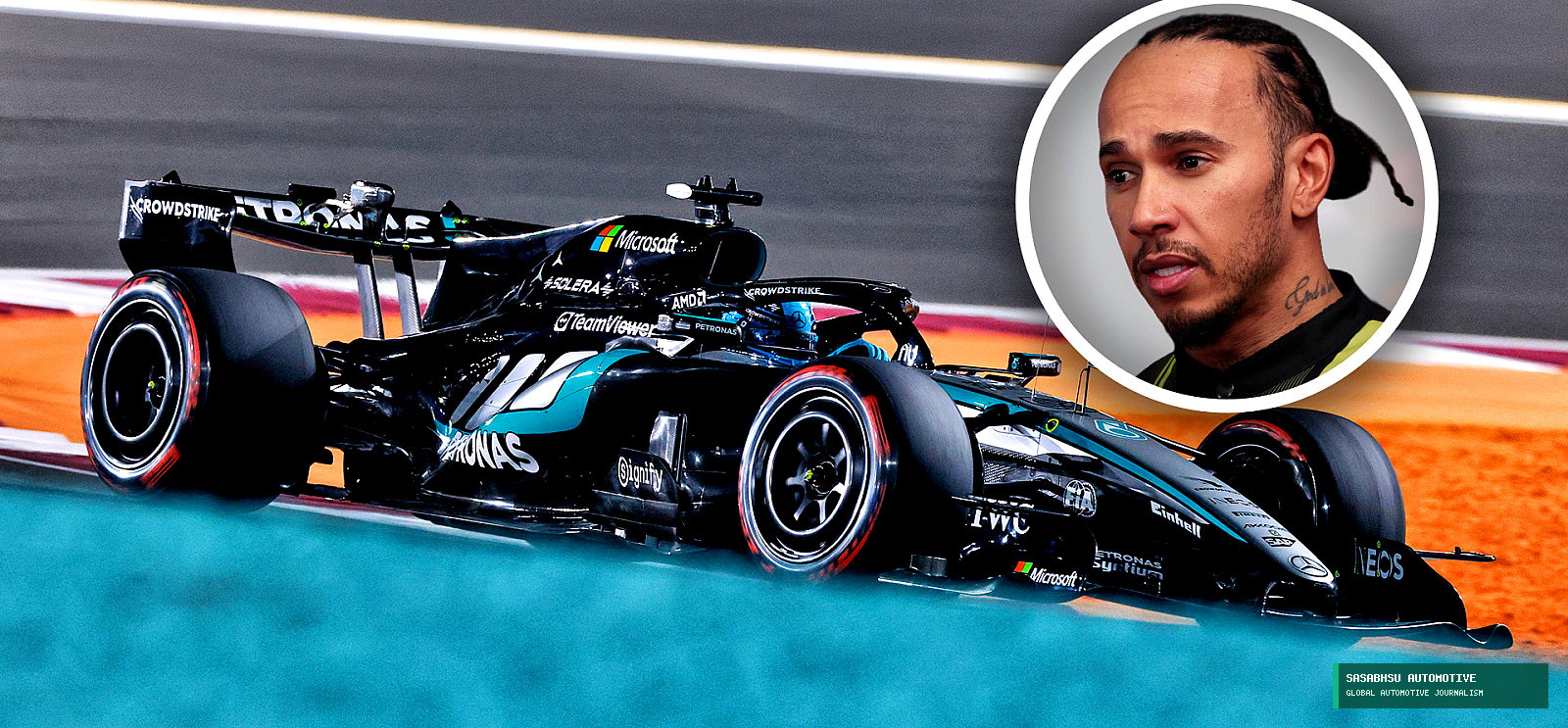
The delta between Mercedes and the rest of the field was most acute through Sector 3, specifically across the triple right-hand sequence of Turns 12, 13, and 14. Observational telemetry and rival analysis from Ferrari's Charles Leclerc indicated that Mercedes approaches Turn 12 at significantly higher entry speeds due to an aggressive hybrid energy deployment strategy, supported by sufficient aerodynamic load to maintain stability throughout the corner complex.
When questioned on whether Red Bull could replicate Mercedes' aggressive entry dynamic, Verstappen addressed the physical limits of his current package with characteristic candor.
“I think if I go through those corners at the speed they're doing, I'll be spinning off the track left, right and centre! Of course, we can set our deployment strategy up like that as well, but I don't think that's a good idea for us!”
— Max Verstappen, Red Bull Racing
Verstappen further elaborated during his media sessions that the deficit stems from a fundamental downforce gap rather than setup errors.
“I think Mercedes has taken a step forward in the high-speed corners compared to the start of the season. We just haven't really seen that until this weekend because most tracks recently have mainly featured slower corners, apart from Austin. Here, it's very clear to us that we're still not good enough in that area, in the high-speed corners, but that also applies to long-duration corners. We just can't get the balance right there. I've changed a lot of things on the car throughout the weekend, but none of it made any difference. We're just lacking.”
— Max Verstappen, Red Bull Racing
Red Bull Package & Hadjar Qualifying Comparison
The aerodynamic imbalance had immediate consequences in qualifying, where Verstappen was outqualified by team-mate Isack Hadjar. Rather than attributing the result to driver performance, Verstappen explained that attempting to extract additional lap time from the ill-balanced package actively degraded cornering performance.
“What I found in qualifying was that the more I wanted to push, the more the car started working against me in terms of balance. So yeah, you just can't get any more out of it. Isack is doing well, but at the same time, from my side, this weekend has just not been good. There's no balance in the car and that’s limiting me. Also, mid-corner, where most of your lap time is, there's not much that you can do.”
— Max Verstappen, Red Bull Racing
Session Telemetry & Engineering Profile
| Event / Track Parameter | Qatar GP Telemetry & Setup Focus |
|---|---|
| Track Location | Lusail International Circuit (Qatar) |
| Primary Circuit Characteristic | High-Speed Sweepers, High Lateral G-Load, Long-Duration Corners |
| Key Benchmark Sector | Sector 3 (Turns 12, 13, 14 Triple Apex Sequence) |
| Mercedes Primary Advantage | High-Speed Peak Downforce & MGU-K High-Speed Entry Deployment |
| Red Bull Aero Upgrade Delta | Baku Package Optimized for Low/Medium Speed Traction; High-Speed Deficit Retained |
| Verstappen Qualifying Result | P6 (Imbalanced Mid-Corner Dynamics) |
Aerodynamic Development Requirements
For Red Bull, the findings in Qatar serve as a clear directive for technical development. Verstappen noted that while overall race pace may yield different dynamics, resolving high-speed instability remains a non-negotiable priority for long-term championship contention into 2027.
“If you look at the numbers, they haven't necessarily improved all that much in the high-speed corners. Our progress has been more about the overall package. We were already lacking in the high-speed corners at the start of the season, so that's no surprise to us either. Of course, we've had a lot of upgrades, but I think most of our upgrades have been working better for low-speed and medium-speed corners. In the high-speed, we're clearly lacking. That's very clear to me... The high-speed corners, but also the overall stability of the car. Those things can clearly still be improved.”
— Max Verstappen, Red Bull Racing
Can Red Bull rectify its high-speed aerodynamic imbalance, or has Mercedes established an insurmountable dynamic lead at high-speed venues? Share your technical critique in the comments below!
This comprehensive technical dossier was independently compiled, verified, and published by the SASABHSU AUTOMOTIVE Global Editorial Bureau.
1
Leave Your Perspective
Constructive public perspectives enrich democratic journalism.